

A deep scientific dive for professionals, researchers, and anyone curious about how bioactive glass truly interacts with the human body.
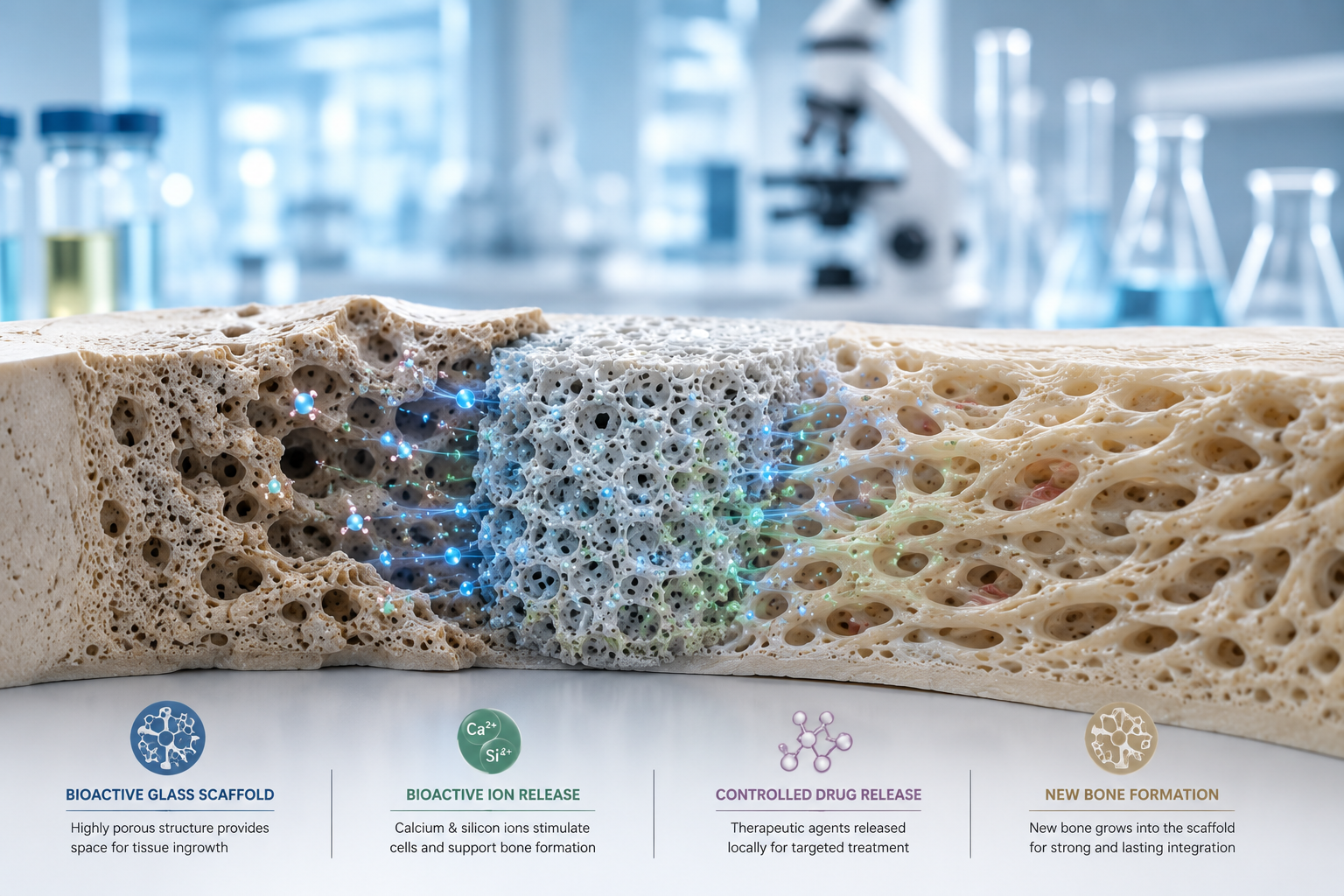
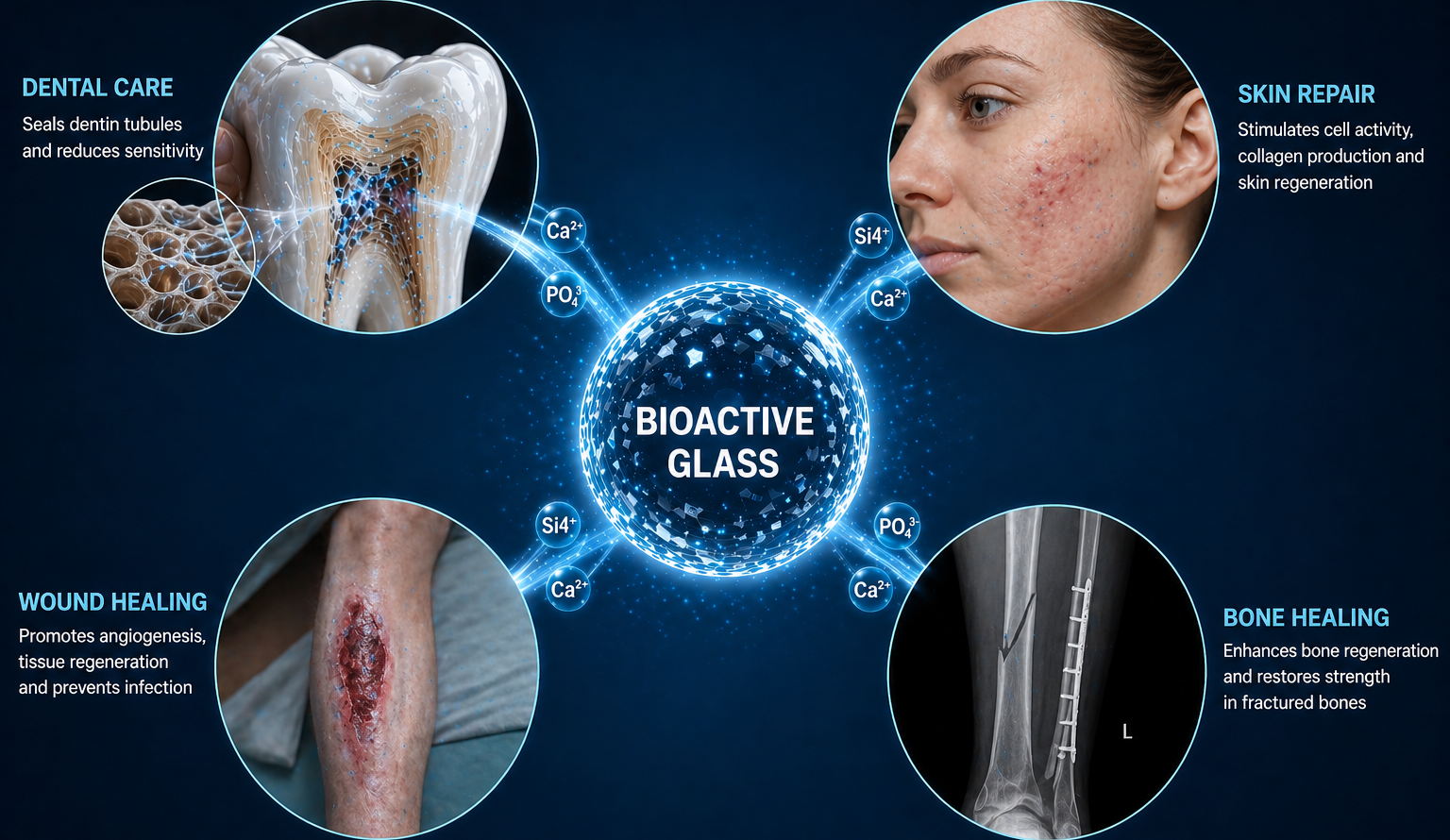
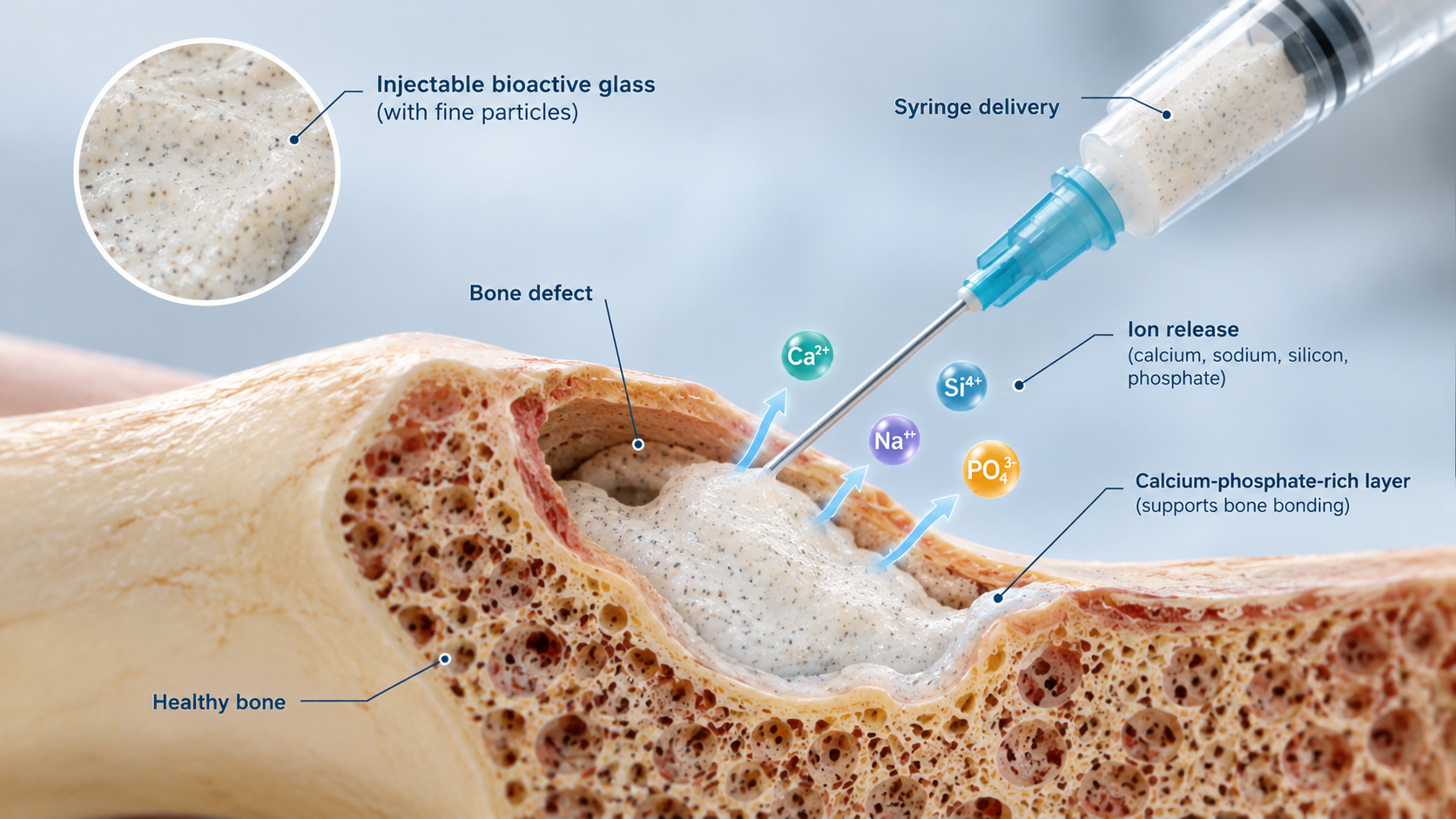
Bioactive glass has earned a reputation in materials science and regenerative medicine for one powerful reason: it communicates with the body. Unlike inert biomaterials that simply “exist” inside tissues, bioactive glass actively participates in healing by releasing ions that stimulate biological processes. Whether the goal is bone repair, soft-tissue enhancement, or advanced regenerative therapies, ion release is the first and most important step in the chain of events that gives bioactive glass its bioactivity.
In our laboratory—and in countless studies worldwide—measuring the release of ions from bioactive glass has become a critical method to understand its behaviour, predict biological performance, and engineer improved formulations. This blog breaks down the science, the methods, and the significance of ion release in a structured, research-style way while making the concepts approachable to a wider audience.
Bioactive glass is not a passive material. The moment it enters a physiological environment—whether in simulated body fluid (SBF), phosphate-buffered saline (PBS), or cell culture medium—it undergoes a controlled degradation process. This isn’t material failure; in fact, it is the very mechanism that allows bioactive glass to bond with tissue and stimulate regeneration.
When bioactive glass interacts with any physiological fluid, an ion-exchange reaction begins almost instantly:
This exchange acidifies the surface structure and transforms the glass network. The original silicate network breaks down and reorganizes into silanol groups (Si–OH), forming a hydrated silica gel layer. Shortly after, calcium and phosphate migrate to the surface, creating an amorphous calcium-phosphate layer. With time, this layer crystallizes into hydroxyapatite, the mineral phase that makes up natural bone.
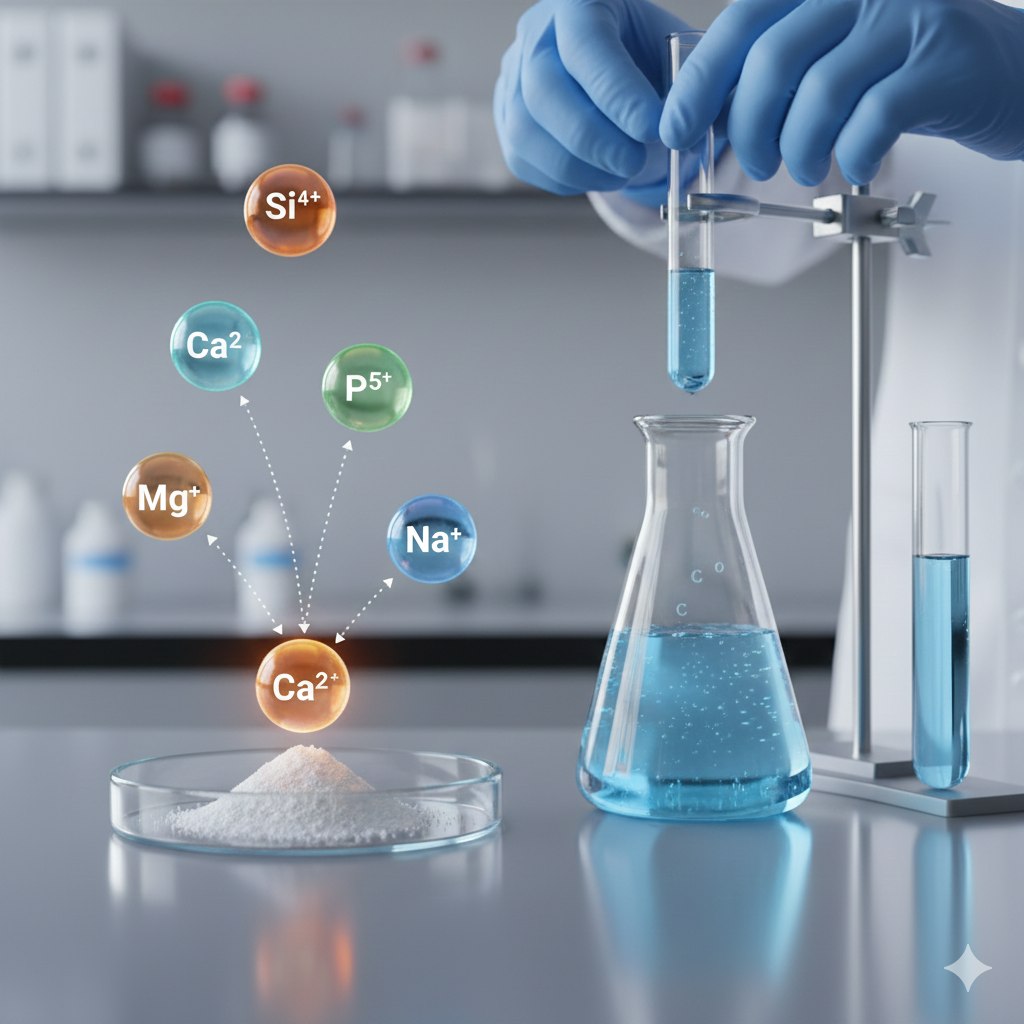
The ions released—especially Si⁴⁺, Ca²⁺, P⁵⁺, Na⁺, and Mg²⁺—act like chemical messengers. Studies have repeatedly demonstrated that these ions:
In simple terms, the biological performance of bioactive glass directly depends on what ions are released, in what quantity, and how fast.
Measuring ion release is a multi-step process that involves controlled immersion experiments and highly sensitive analytical instruments. This ensures that the data accurately reflects what the material does inside the body.
Below, I’m presenting the workflow in a clear research-style structure, similar to how we follow it in real laboratory environments.
Bioactive glass can be prepared in several forms—powders, particles, scaffolds, or dense monoliths. The geometry matters, because surface area directly affects dissolution rate.
All samples are sterilised when ion-release experiments connect to biological or cell studies.
Bioactive glass is typically immersed in one of three fluids depending on the test objective:
Used to mimic ionic composition of human plasma.
Stable pH-buffered environment to isolate dissolution kinetics.
Used when the objective is to correlate ion release with biological outcomes.
Maintaining these conditions ensures consistency across time points and reproducibility.
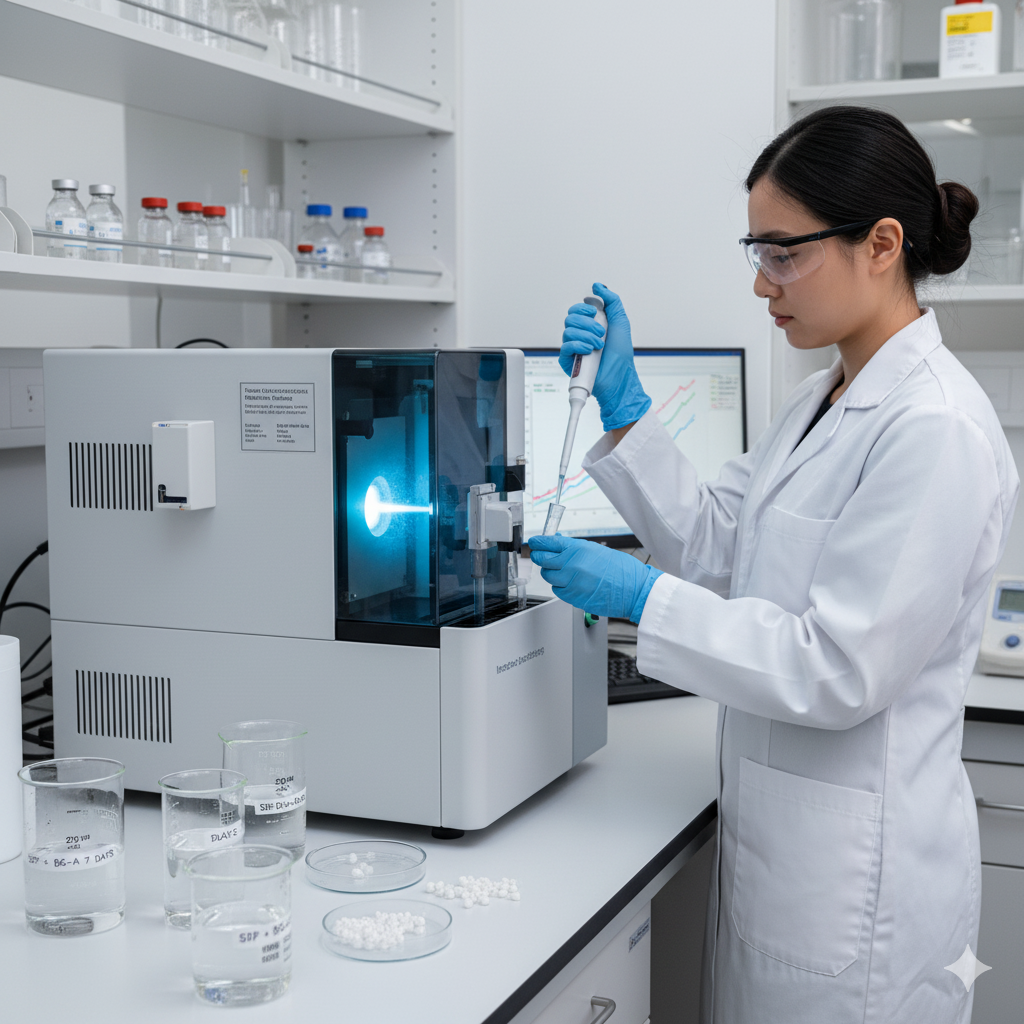
Ion release studies involve collecting small fluid samples over time while keeping experimental volume constant.
At each interval:
I can tell from experience that even small lapses here—like inconsistent pipetting or contamination—can interfere with analytical results. Precision is key.
Once samples are collected, the next step is to analyse the concentration of ions released from the bioactive glass.
The two gold-standard techniques are:
Before analysis, samples are usually diluted with nitric acid (HNO₃) to ensure they fall within instrument calibration ranges.
Calibration standards are prepared for every element. Instrument parameters such as plasma power, nebulizer flow, and wavelength selection are optimized for maximum accuracy.
Ion concentrations are typically expressed as:
Researchers then calculate cumulative release and plot the values against time.
This profile is widely considered a signature of high-quality bioactive glass.
Not all bioactive glass compositions behave the same way. SiO₂ content, network modifiers, particle size, and porosity all shape dissolution kinetics.
These variables must be optimized depending on the intended application—bone repair vs soft-tissue regeneration often require different dissolution speeds.
Researchers increasingly recognize that bioactive glass is not merely a mineral donor. The ions act as signaling cues that change how cells behave.
This is why ion-release data is often paired with biological assays like:
Together, they provide a comprehensive picture of bioactive glass performance.
From observing real lab setups, I’ve learned that several factors often lead to misleading results:
If the ratio of solution to sample is too low, released ions may hit solubility limits, giving an artificially low reading.
Bioactive glass increases pH. If pH rises too far, dissolution changes drastically. Monitoring pH alongside ion release is essential.
Glass containers, improperly cleaned pipette tips, or metal tools can introduce background ions.
Cell culture media contain many ions already. Using matrix-matched standards avoids incorrect calibration.
Variations in mass or surface area create misleading comparisons.
A method is only as good as its controls. And in ion-release studies, controls are everything.
The goal of measuring ion release is not just to collect numbers—it is to understand how the bioactive glass behaves biologically.
Ultimately, ion release is a window into the future behaviour of the material.
Bioactive glass is one of the most fascinating and impactful materials in regenerative medicine. Its ability to dissolve in a controlled manner and release biologically active ions makes it uniquely capable of stimulating healing rather than simply serving as a passive support.
Measuring ion release provides the foundational evidence needed to understand dissolution behaviour, optimize material design, evaluate bioactivity, and connect material performance with cellular outcomes. Whether you are a student just discovering the field, a healthcare professional exploring biomaterials, or a scientist developing the next generation of regenerative technologies, ion release remains the most direct way to evaluate what bioactive glass truly offers.
This blog has walked through the key mechanisms, experimental methods, analytical tools, and interpretations associated with ion release from bioactive glass—presented in a professional, authoritative, yet human tone. Part II will explore correlating ion-release data with cellular outcomes and advanced characterizations.
Contact us through Synthera Biomedical social platforms to stay informed about pioneering bioactive glass research and clinical applications. Follow us on Instagram for product launches and research updates. Join the conversation on Facebook to access valuable resources and community news.