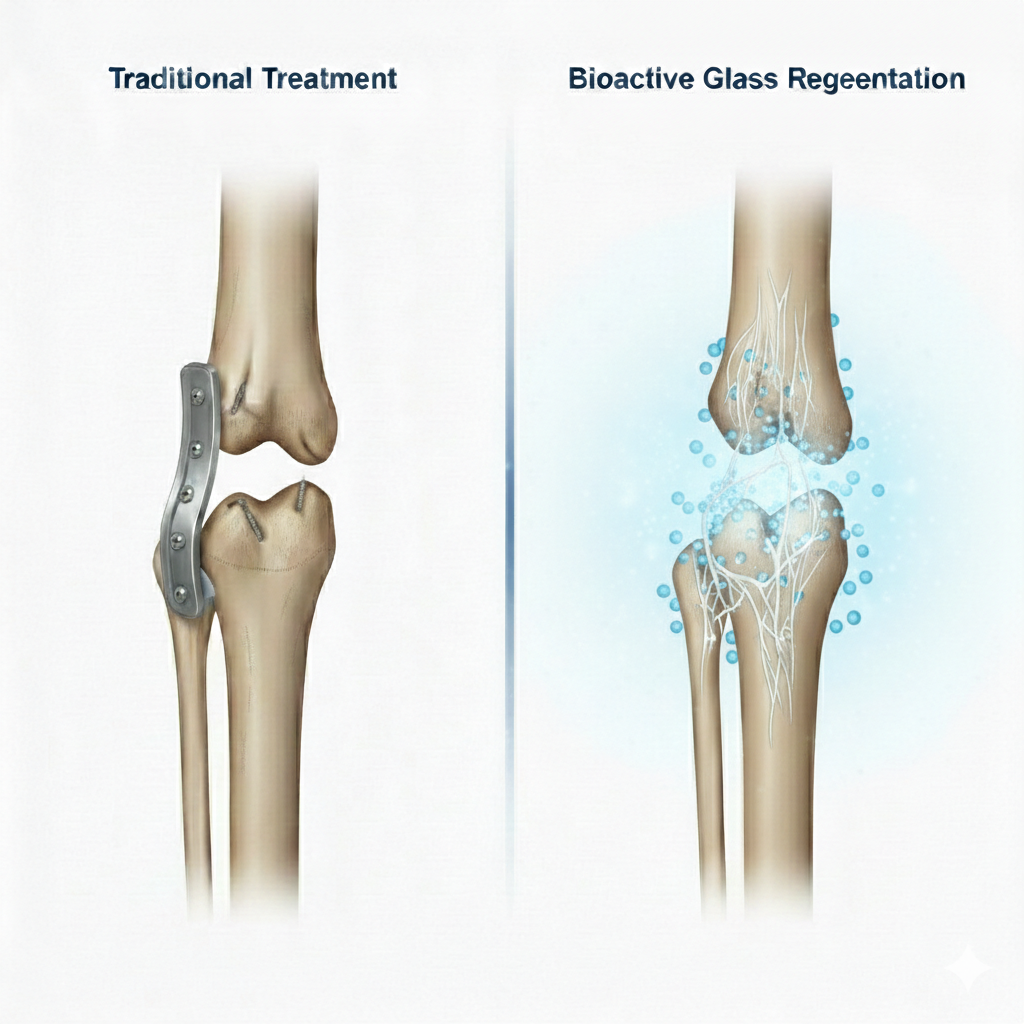

In modern medicine, scientists are constantly searching for smarter ways to deliver medicines exactly where the body needs them. One material that is gaining significant attention in this area is bioactive glass. Known for its ability to interact with the body and support healing, bioactive glass is now emerging as a powerful platform for controlled drug delivery.
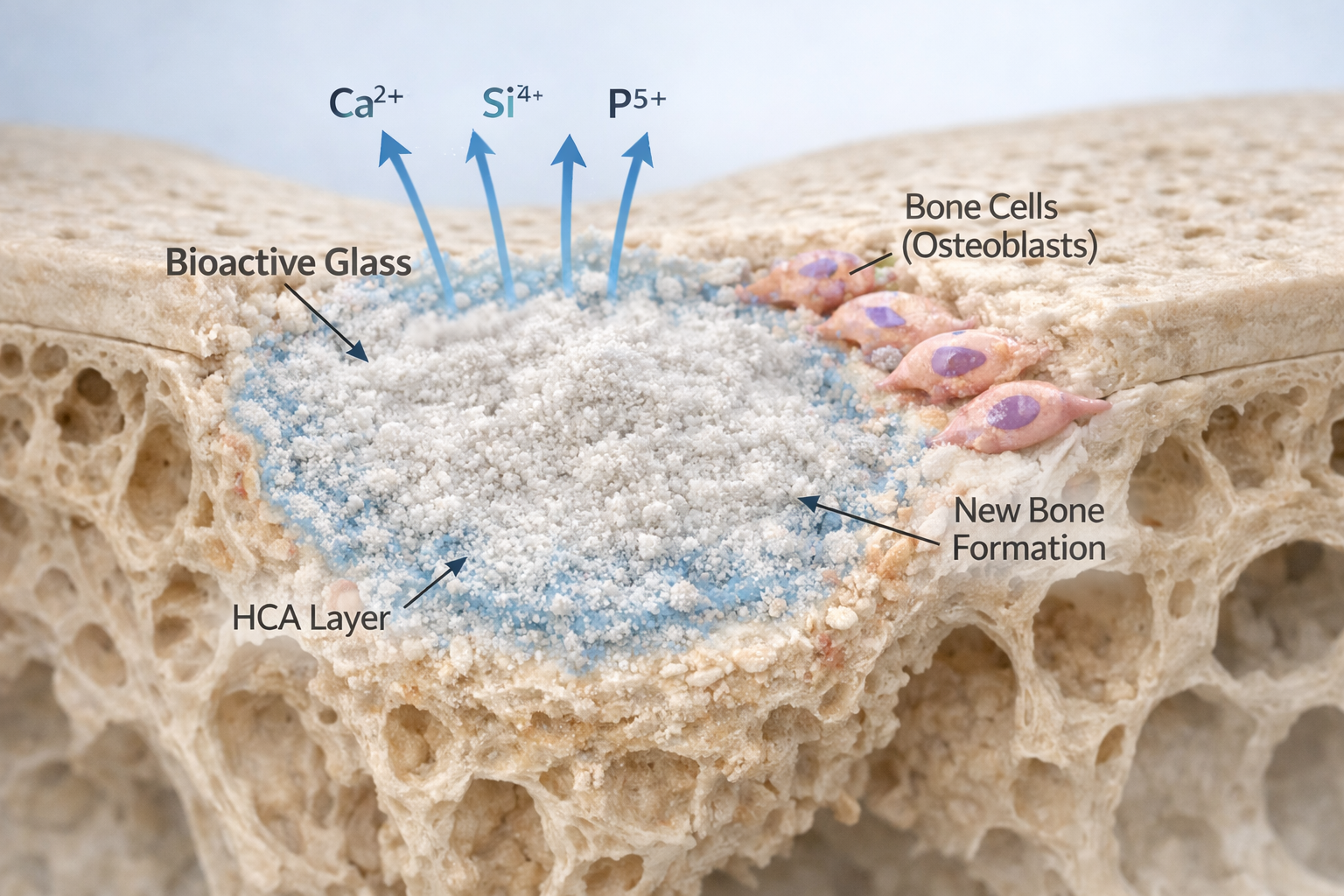
Originally developed in 1969 by Larry Hench, bioactive glass was designed for bone regeneration. Unlike traditional materials used in medical implants, which simply replace damaged tissue, bioactive glass actively interacts with the body. When placed in the body, it forms a layer similar to natural bone minerals called hydroxyapatite, allowing it to bond directly with bone tissue.
Today, researchers are discovering that this same property makes bioactive glass highly valuable for delivering therapeutic drugs in a controlled and targeted way.
Why Bioactive Glass is Ideal for Drug Delivery
One of the biggest advantages of bioactive glass is its controlled degradation behavior.
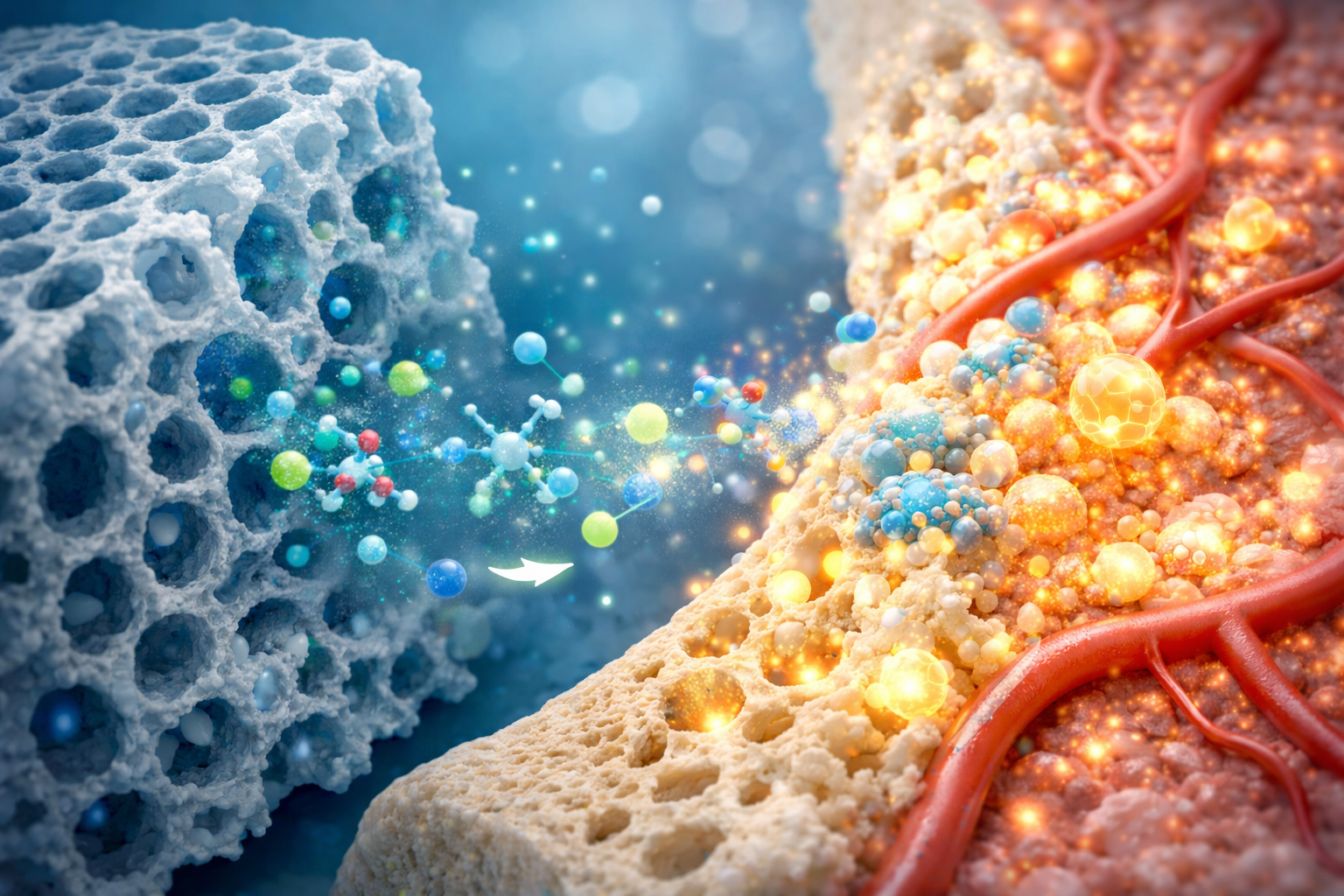
When bioactive glass comes into contact with body fluids, it slowly dissolves and releases beneficial ions such as:
- Silicon
- Calcium
- Phosphate
These ions are not just harmless byproducts—they actually help the body heal. For example, they can:
- Stimulate bone growth (osteogenesis)
- Encourage new blood vessel formation (angiogenesis)
- Support overall tissue regeneration
Scientists can also adjust the composition of bioactive glass by changing the ratios of components like silica, calcium oxide, sodium oxide, and phosphorus pentoxide. By doing this, they can control how fast the material dissolves and how quickly drugs are released.
This makes bioactive glass especially useful in regenerative medicine, where both healing support and drug delivery are required.
Mesoporous Bioactive Glass: A Major Breakthrough
A major advancement in this field is the development of mesoporous bioactive glass (MBG).
This type of bioactive glass contains extremely tiny pores, typically between 2 and 50 nanometers in size. These microscopic pores dramatically increase the material’s surface area, allowing it to store and release larger amounts of drugs.
The pores act like tiny reservoirs that hold therapeutic molecules. Because of this structure, drugs can be released slowly and steadily rather than all at once.
This helps avoid the common problem of burst release, where a drug is released too quickly from a carrier material.
Researchers have successfully loaded mesoporous bioactive glass with:
- Antibiotics
- Anti-inflammatory drugs
- Growth factors
- Anticancer drugs
The surface of these pores can also be chemically modified to fine-tune how drugs attach and how they are released, giving scientists even more control over treatment.
Bioactive Glass Nanoparticles for Targeted Therapy
Another exciting development is the use of bioactive glass nanoparticles.
By reducing bioactive glass into extremely small particles, scientists increase the material’s surface area and reactivity, allowing it to interact more efficiently with cells.
These nanoparticles can even be designed for targeted drug delivery. For example, they can be engineered to release drugs specifically in certain environments inside the body.
In cancer therapy, bioactive glass nanoparticles can carry chemotherapy drugs and release them when they encounter the acidic environment of tumors. This targeted approach can:
- Reduce damage to healthy tissues
- Lower side effects
- Improve treatment efficiency
An additional advantage is that bioactive glass can also support tissue repair after tumor removal, something most traditional drug carriers cannot do.
Bioactive Glass Composites for Better Strength and Healing
Although bioactive glass has excellent biological properties, it can sometimes be brittle. To solve this, researchers often combine it with biodegradable polymers, creating composite materials.
Common polymers used include:
- Polycaprolactone (PCL)
- Polylactic acid (PLA)
- Natural polymers such as collagen
These composites improve the strength and flexibility of the material while keeping its healing properties intact.
Using modern techniques like 3D printing and additive manufacturing, these materials can be shaped into three-dimensional scaffolds. These scaffolds can:
- Support tissue regeneration
- Deliver drugs slowly over time
- Provide structural support to damaged tissues
For example, in orthopedic treatments, a scaffold made with bioactive glass could release antibiotics to prevent infection while simultaneously encouraging new bone growth.
How Drugs Are Loaded into Bioactive Glass
There are several ways drugs can be incorporated into bioactive glass.
Some of the most common methods include:
Physical adsorption
The drug attaches to the surface of the material. This method is simple but may cause faster release initially.
Covalent bonding
The drug forms a chemical bond with the material, allowing slower and more controlled release.
Encapsulation in pores
Drugs are trapped inside the tiny pores of mesoporous bioactive glass, allowing sustained and steady release.
The release of drugs may occur through several mechanisms, including:
- Diffusion through pores
- Material degradation
- Ion exchange
- Environmental triggers such as pH changes
Interestingly, infected or inflamed tissues often become more acidic, which can cause certain bioactive glasses to dissolve faster. This means more drugs are released exactly where they are needed most.
Medical Applications of Bioactive Glass Drug Delivery
Because of its unique properties, bioactive glass is being explored in many areas of healthcare.
Orthopedics
Bioactive glass can deliver antibiotics directly to bone infections, such as osteomyelitis, while supporting bone regeneration.
Dentistry
Drug-loaded bioactive glass can help in:
- Periodontal regeneration
- Root canal treatments
- Antimicrobial dental therapies
Wound Healing
Bioactive glass can promote blood vessel formation and tissue repair, making it useful in advanced wound care.
Cancer Treatment
Nanoparticle forms of bioactive glass can deliver targeted chemotherapy, reducing systemic toxicity and improving treatment precision.
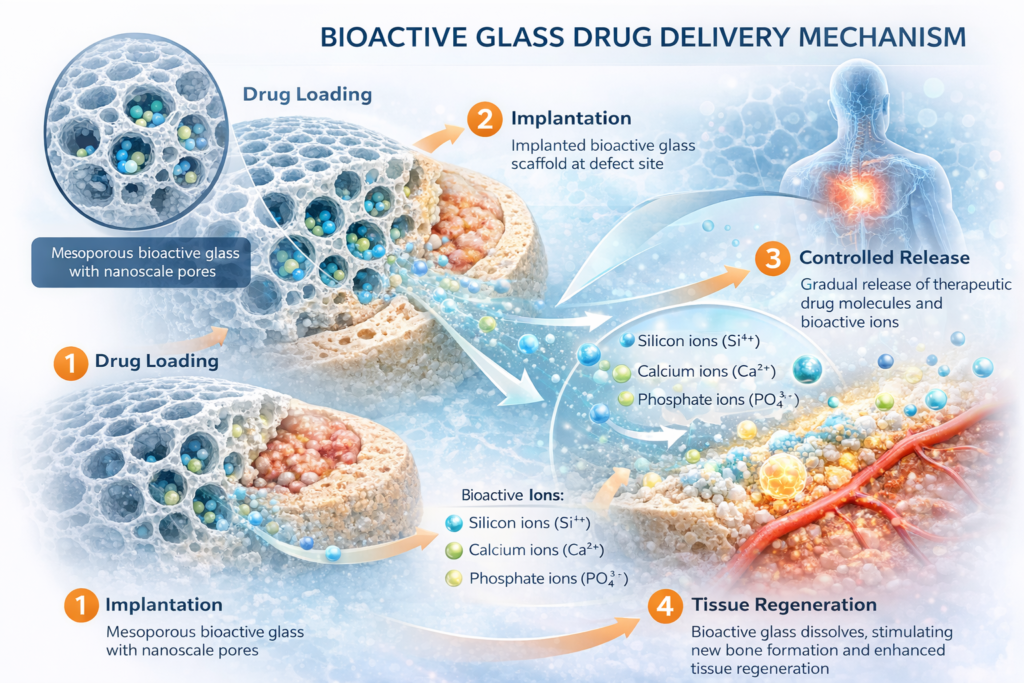
Mesoporous bioactive glass structure showing nanoscale pores loaded with therapeutic molecules and the controlled release of silicon, calcium, and phosphate ions
Challenges and Future Research
Despite its exciting potential, bioactive glass drug delivery systems still face some challenges.
Researchers are working to improve:
- Control over initial burst drug release
- Large-scale manufacturing methods
- Consistency in pore structure
- Regulatory approval for combination medical products
Long-term studies are also needed to fully understand how these materials behave in the body over extended periods.
The Future of Bioactive Glass in Medicine
The future of bioactive glass looks extremely promising. Scientists are now developing smart bioactive glasses that respond to specific biological signals inside the body.
Emerging technologies may soon allow:
- Patient-specific implants using 3D printing
- Stimuli-responsive drug delivery systems
- Combination therapies with biologics or gene therapy
As healthcare moves toward precision medicine and regenerative treatments, bioactive glass stands out as a material that can both repair tissues and deliver therapy at the same time.
What began as a material designed to bond with bone has now evolved into a multifunctional biomedical platform—one that could play a major role in the future of advanced medical treatments.
Contact us through Synthera Biomedical social platforms to stay informed about pioneering bioactive glass research and clinical applications. Follow us on Instagram for product launches and research updates. Join the conversation on Facebook to access valuable resources and community news.
References:
1) Hench, L. L. (1969). The story of Bioglass. Journal of Materials Science: Materials in Medicine, 17(11), 967–978.
2) Xynos, I. D., et al. (2000). Gene-expression profiling of human osteoblasts following treatment with dissolution products of bioactive glass. Journal of Biomedical Materials Research, 55(2), 151–157.
3) Yan, X., et al. (2004). Mesoporous bioactive glasses for controlled drug release. Angewandte Chemie International Edition, 43(44), 5980–5984.
4) Baino, F., et al. (2018). Bioactive glass nanoparticles: A review. Materials Science and Engineering C, 91, 543–563.
5) Zhang, J., et al. (2010). Antibacterial bioactive glass scaffolds with controlled drug release. Biomaterials, 31(24), 5865–5874.
6) Izquierdo-Barba, I., et al. (2011). Influence of the pore size distribution on drug delivery from mesoporous bioactive glasses. Acta Biomaterialia, 7(7), 2977–2985.