
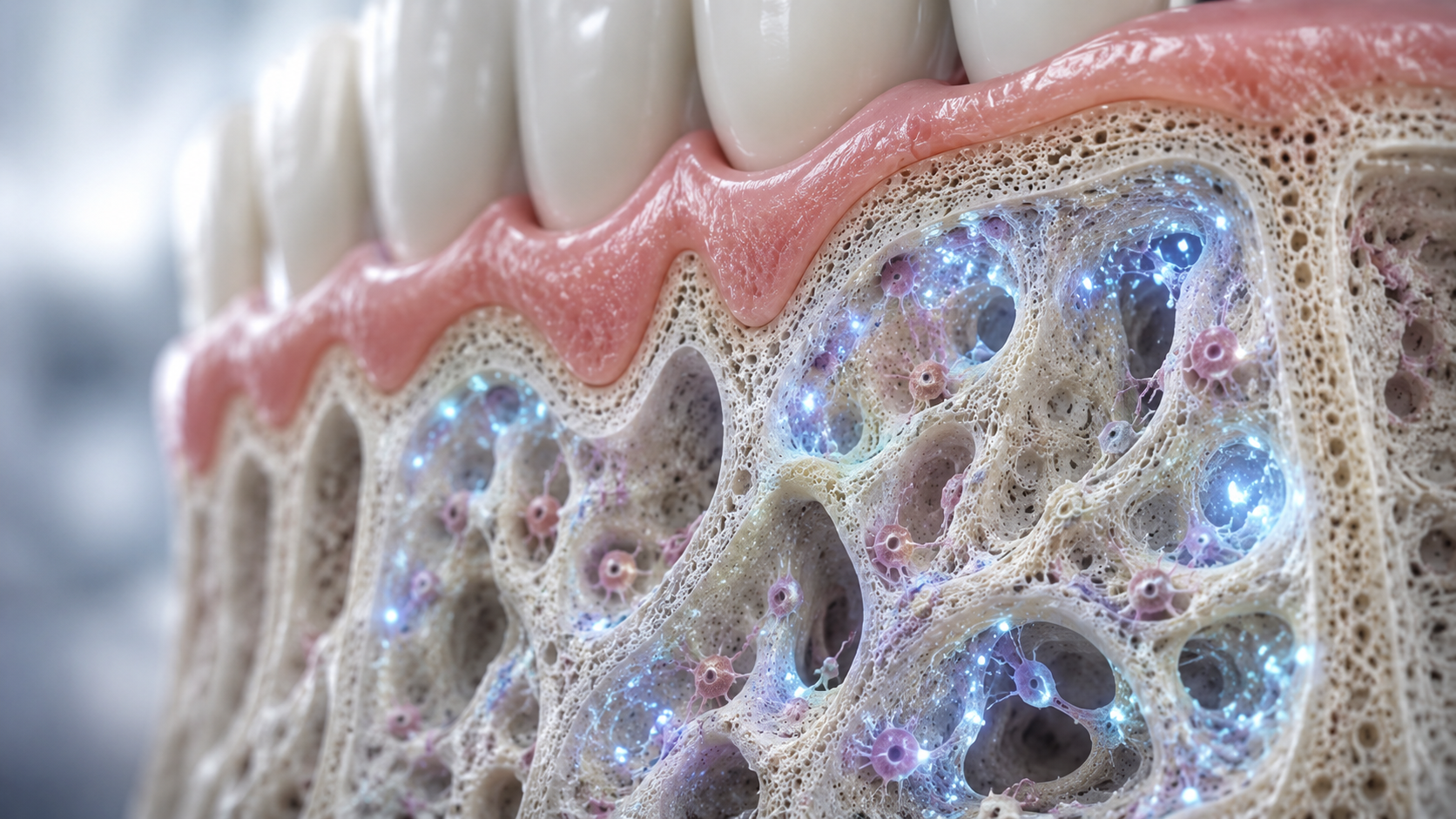

Dental implants have transformed restorative dentistry by offering long-term and reliable solutions for missing teeth. Among all implant materials, titanium implants have remained the gold standard for decades because of their excellent strength, durability, and corrosion resistance.
Despite their success, traditional dental implants still face several clinical challenges. Issues such as peri-implantitis, delayed healing, bacterial colonization, and inadequate osseointegration in patients with poor bone quality continue to affect treatment outcomes.
Modern dentistry is now moving toward regenerative and biologically active solutions rather than relying only on mechanical support. This is where bioactive glass coatings are emerging as one of the most promising advancements in implant technology.
Unlike conventional implant surfaces, bioactive glass coatings actively interact with surrounding tissues. They help stimulate bone regeneration, support healing, reduce infection risks, and improve implant integration with the body.
The future of dental implants is no longer just about replacing missing teeth. It is about creating implant systems that actively support tissue health and long-term healing.
Bioactive glass is a specialized biomaterial primarily composed of:
Unlike inert materials, bioactive glass can chemically interact with biological tissues after implantation.
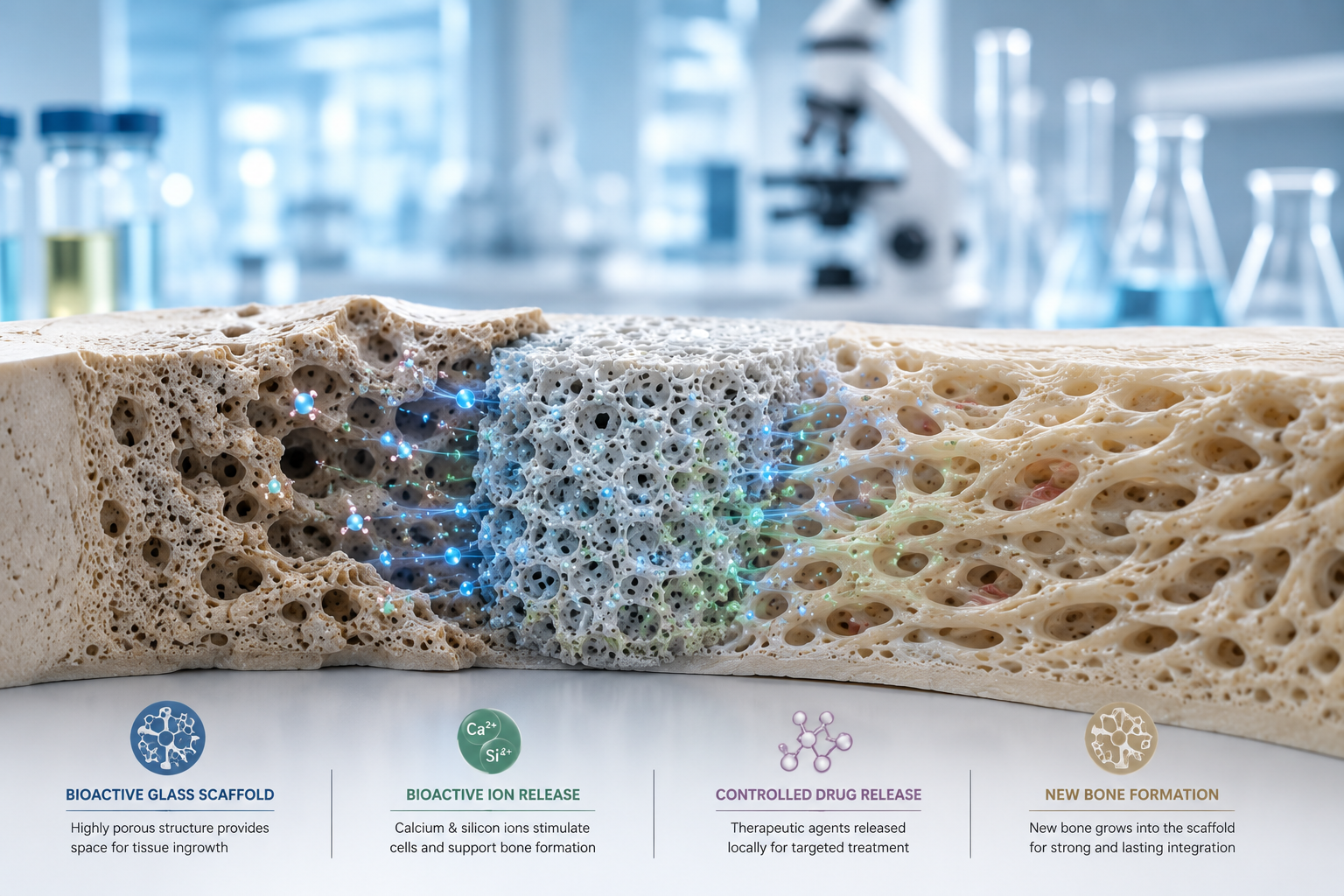
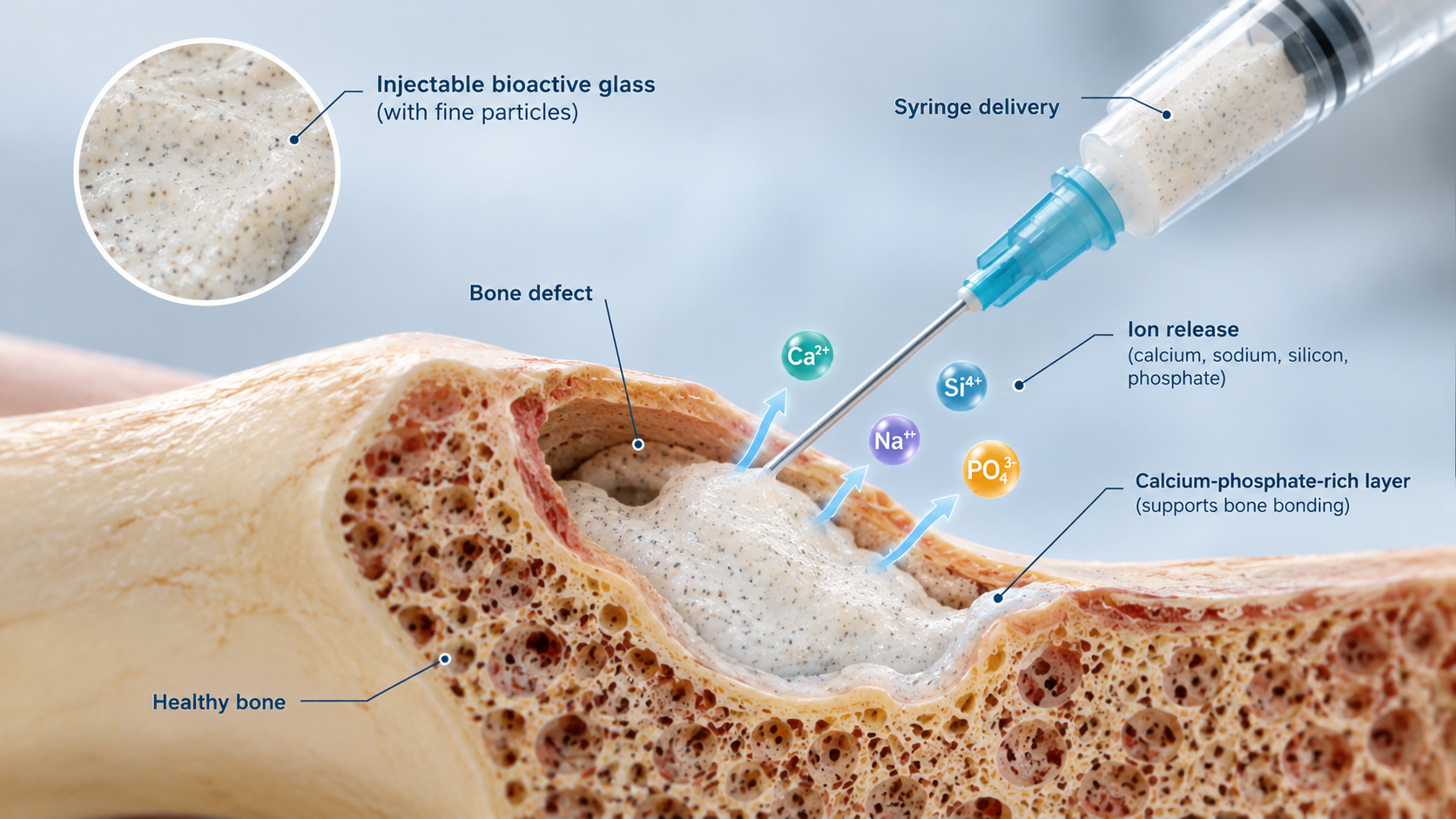
One of its most important properties is its ability to form a hydroxycarbonate apatite (HCA) layer when exposed to body fluids. This layer closely resembles the mineral composition of natural bone and creates a strong bond between the implant and surrounding tissues.
When used as a coating on dental implants, bioactive glass transforms a passive implant surface into an active biological interface that supports tissue integration and healing.
Titanium implants offer excellent structural performance, but they are biologically inert. They mainly rely on physical attachment to bone rather than actively supporting tissue regeneration.
Several clinical concerns still exist with traditional implant systems.
Peri-implantitis is an inflammatory condition caused by bacterial accumulation around dental implants. Over time, this can lead to bone loss and eventual implant failure.
As dental implant procedures continue to rise worldwide, peri-implant infections are becoming an increasingly important concern in modern implant dentistry.
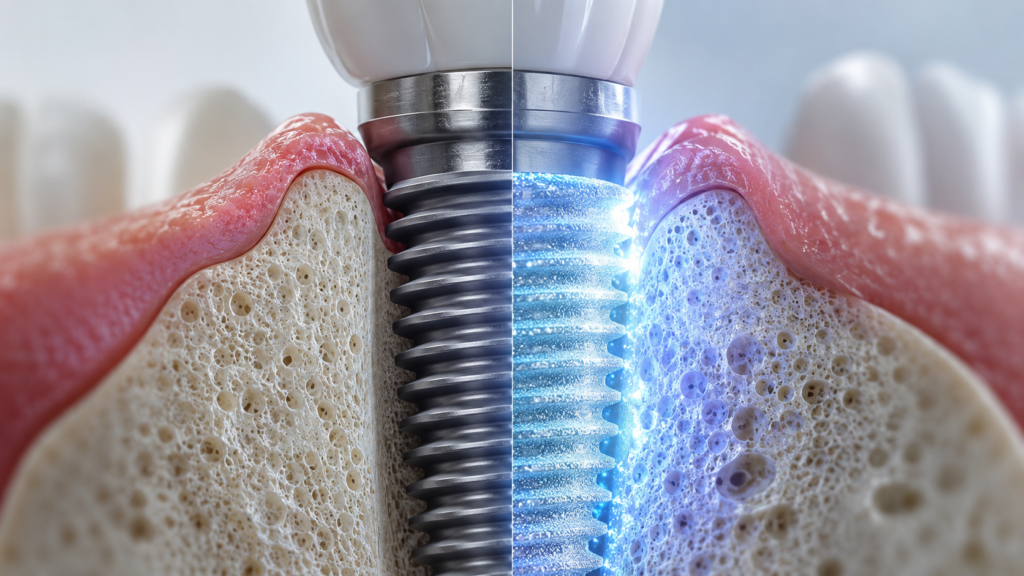
Patients with conditions such as:
often experience slower and less predictable osseointegration. This can increase healing time and affect implant stability.
Traditional implant surfaces are commonly modified using methods like:
These techniques improve mechanical retention but do not actively encourage biological healing or tissue regeneration.
Conventional dental implants may require several months before they can safely support functional loading, especially in patients with compromised healing conditions.
Bioactive glass coatings help address many of these limitations by introducing biological functionality directly onto the implant surface.
When a bioactive glass-coated implant comes into contact with body fluids, several biological reactions begin to occur:
This process creates an ideal environment for tissue regeneration and bone healing.
In addition to forming a bone-like apatite layer, the ions released from bioactive glass stimulate:
As a result, the implant surface becomes biologically active rather than simply structural.
One of the biggest advantages of bioactive glass coatings is their ability to improve osseointegration.
Osseointegration refers to the direct connection between living bone and the implant surface. It is one of the most critical factors for implant stability and long-term success.
Bioactive glass coatings help promote:
The hydroxyapatite-like layer formed by bioactive glass closely mimics natural bone chemistry, encouraging rapid tissue attachment and cellular response.
This improved biological interaction is especially beneficial for patients with compromised healing conditions or poor bone quality.
One of the most promising benefits of bioactive glass coatings is their antimicrobial activity.
Bacterial colonization and biofilm formation are major causes of peri-implantitis and implant failure. Conventional implant surfaces may allow bacteria to accumulate gradually over time.
Bioactive glass coatings help reduce infection risk by:
Some advanced bioactive glass formulations are also doped with therapeutic ions such as:
to further enhance antimicrobial performance.
Unlike systemic antibiotics, bioactive glass provides localized and long-lasting antimicrobial action without significantly contributing to antibiotic resistance.
As concerns regarding antimicrobial resistance continue to grow globally, bioactive glass coatings may offer safer and more sustainable infection-control strategies in implant dentistry.
Today’s patients increasingly expect:
Bioactive glass coatings help support these expectations by accelerating healing and tissue regeneration.
The ionic dissolution products released from bioactive glass stimulate several important biological processes, including:
This regenerative potential makes bioactive glass highly valuable in advanced dental implant systems.
Modern dentistry is rapidly shifting toward regenerative treatment approaches instead of simple replacement procedures.
Bioactive glass coatings integrate effectively with regenerative therapies such as:
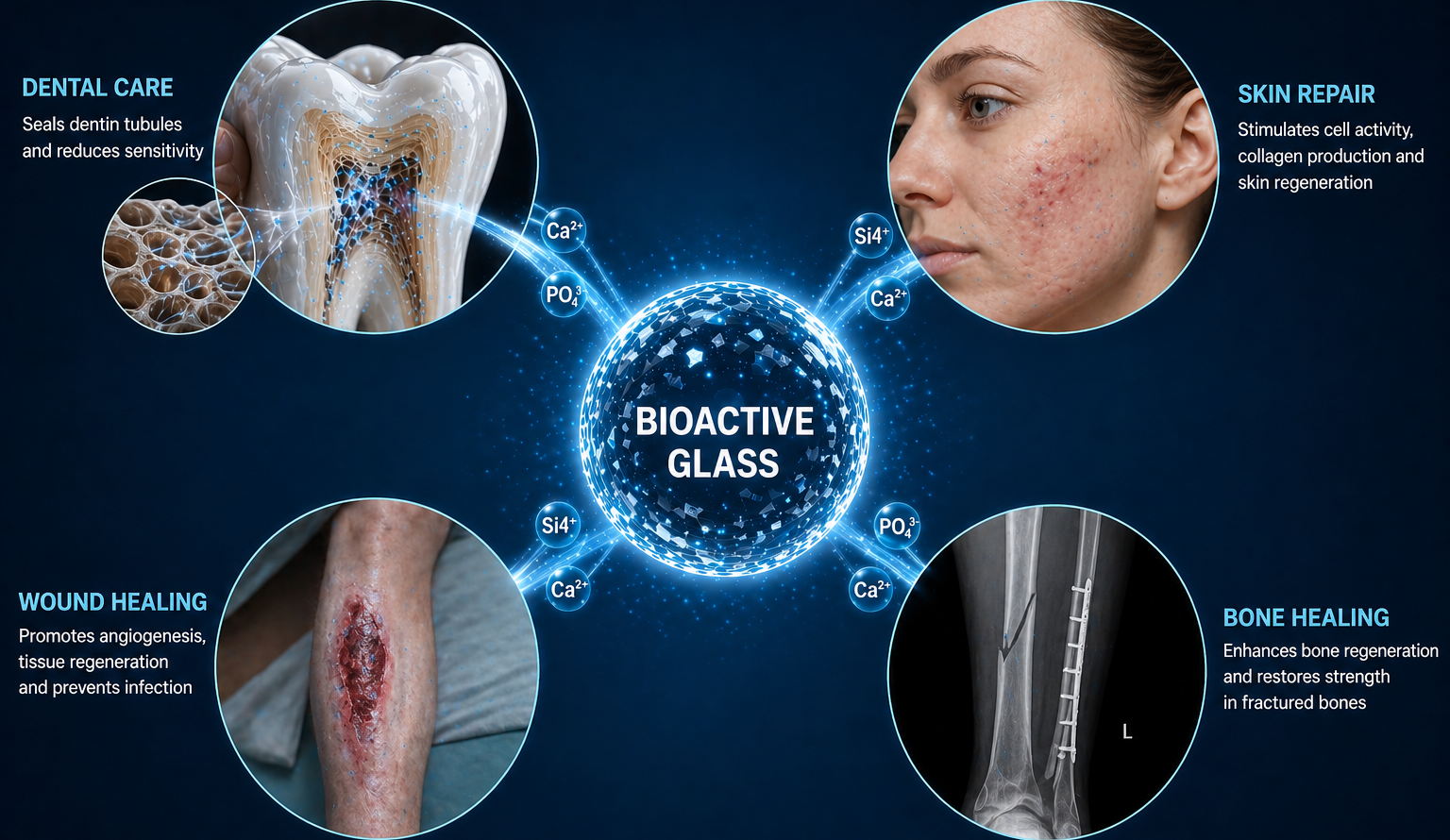
Bioactive glass particles are already widely used in periodontal regeneration and bone graft substitutes. Applying similar bioactivity directly onto implant surfaces creates a more supportive healing environment around the implant.
In the future, dental implants may function not only as tooth replacements but also as active therapeutic systems that support tissue regeneration.
One of the most exciting developments in implantology is the concept of smart implants.
Researchers are currently exploring bioactive coatings capable of:
Future implant systems may even be able to detect infection early and release therapeutic agents automatically.
Because of its adaptable chemistry and biological compatibility, bioactive glass is considered an ideal material platform for these advanced technologies.
The future of dental implantology depends on creating biologically active systems that improve healing while reducing complications.
Bioactive glass coatings offer several major advantages:
These coatings transform dental implants from passive devices into biologically interactive systems that actively participate in tissue regeneration and healing.
As research continues to advance and clinical adoption increases, bioactive glass coatings are expected to redefine the future standards of implant dentistry.
Dental implant technology is evolving rapidly alongside advancements in biomaterials science and regenerative medicine.
While titanium implants have delivered successful clinical outcomes for decades, the next generation of implant systems must offer more than mechanical stability alone.
Bioactive glass coatings represent a major advancement because they actively support bone regeneration, improve osseointegration, reduce infection risk, and accelerate healing.
Their ability to interact biologically with surrounding tissues makes them one of the most promising innovations in modern implantology.
As clinicians continue to seek safer, faster, and more predictable implant solutions, bioactive glass coatings are likely to become an essential part of future dental implant systems.
The transition from inert implant surfaces to regenerative and biologically active implant technologies has already begun — and bioactive glass coatings are leading this transformation.
References:
1) Dai LL, Mei ML, Chu CH, Lo ECM. Mechanisms of Bioactive Glass on Caries Management: A Review. Materials (Basel). 2019
2) Galarraga-Vinueza ME, Mesquita-Guimarães J, et al. Anti-biofilm properties of bioactive glasses embedding organic active compounds. J Biomed Mater Res A. 2017
3) Ali S, Farooq I, Iqbal K. A review of the effect of various ions on the properties and the clinical applications of novel bioactive glasses in medicine and dentistry. Saudi Dent J. 2014.
4) Cannio M, Bellucci D, Roether JA, Boccaccini DN, Cannillo V. Bioactive Glass Applications: A Literature Review of Human Clinical Trials. Materials (Basel). 2021
5) Skallevold, H.E.; Rokaya, D.; Khurshid, Z.; Zafar, M.S. Bioactive Glass Applications in Dentistry. Int. J. Mol. Sci. 2019