
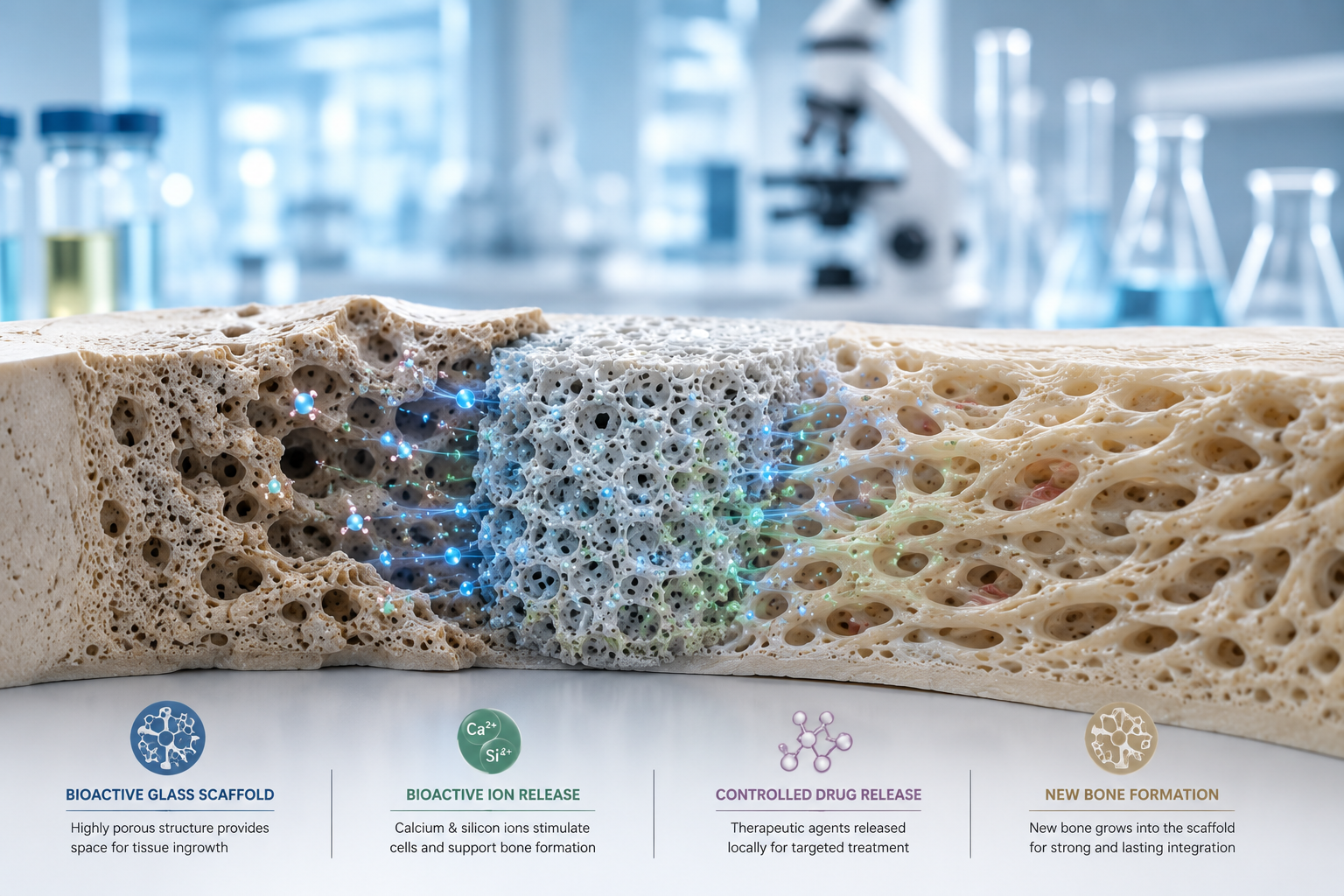

Imagine a material that not only helps damaged bone heal but also delivers medicine exactly where it is needed. That is the idea behind drug-eluting bioactive glass.
Traditional implants mainly provide structural support. While they help stabilize damaged bone, they do not actively contribute to healing beyond their physical function. In many cases, patients also need antibiotics, anti-inflammatory medicines, or other therapeutic agents to support recovery.
Drug-eluting bioactive glass combines these two roles in a single material. It supports natural bone regeneration while gradually releasing therapeutic agents directly at the treatment site.
This combination has made drug-eluting bioactive glass an area of growing interest in orthopaedics, dentistry, and regenerative medicine.
Drug-eluting bioactive glass is a specially designed bioactive glass that can carry and gradually release therapeutic agents while supporting bone repair.
Bioactive glass itself is a well-known biomaterial used for bone regeneration. Unlike materials that simply remain inside the body, bioactive glass interacts with surrounding tissues. As it slowly dissolves, it releases biologically active ions that encourage the body’s natural healing response.
When therapeutic agents such as antibiotics, growth factors, peptides, or other medicines are incorporated into the material, the bioactive glass also becomes a controlled drug delivery system.
This means a single material can support tissue repair while delivering treatment exactly where it is needed.
Bioactive glass is a specialized bio-ceramic material developed for bone repair and regeneration.
It is commonly made using a combination of:
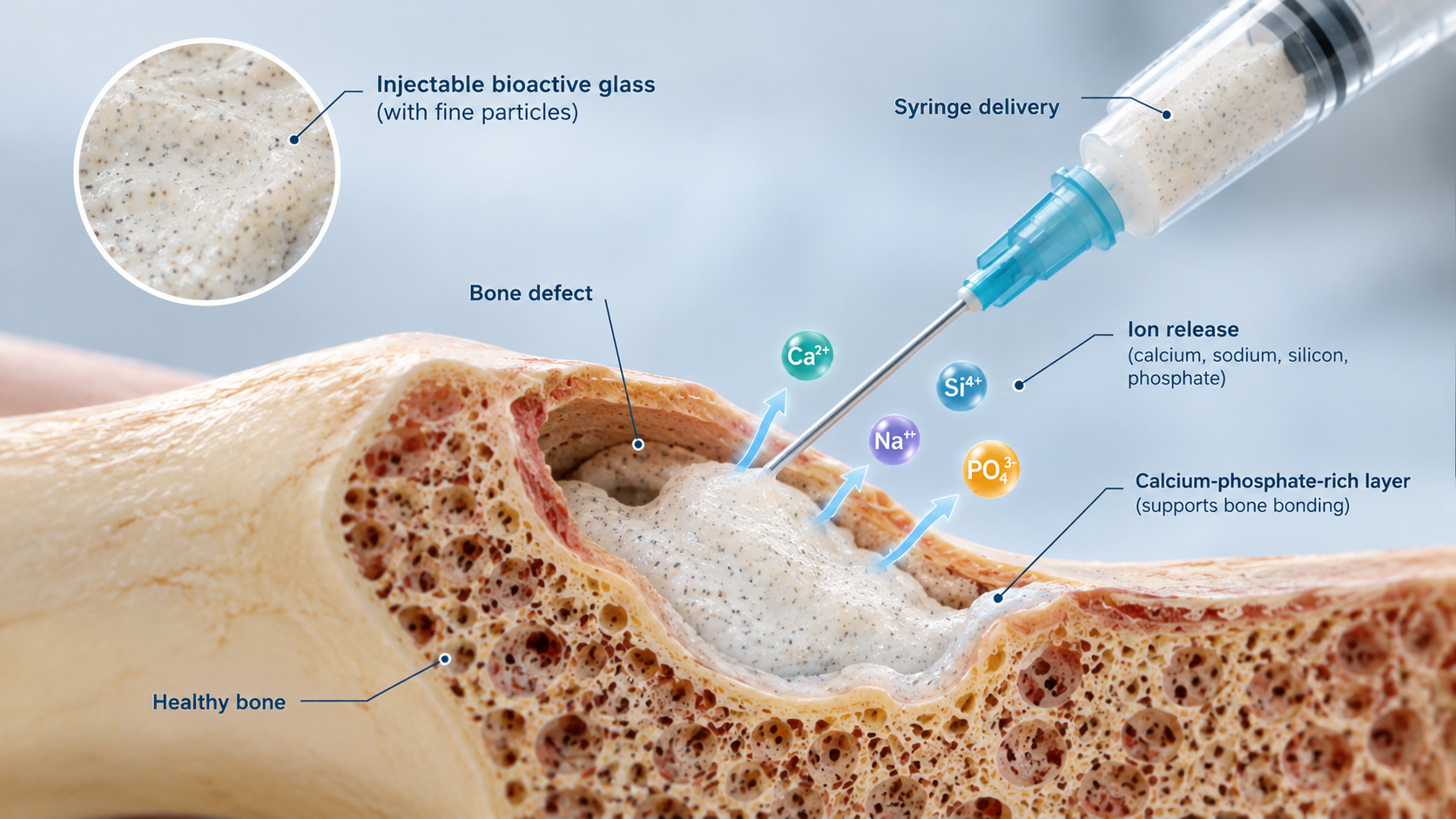
When placed inside the body, bioactive glass gradually dissolves and releases beneficial ions such as calcium and silicon. These ions encourage cells involved in bone formation to become active.
At the same time, the surface of the material develops a hydroxyapatite-like layer. This layer closely resembles the mineral found in natural bone, allowing the material to bond with surrounding bone tissue.
Advances in mesoporous and nanostructured bioactive glass have further improved its ability to carry and release therapeutic agents.
One of the biggest advantages of drug-eluting bioactive glass is that two important processes happen at the same time.
As the bioactive glass slowly dissolves, it releases calcium and silicon ions into the surrounding area. These ions help stimulate cells responsible for new bone formation.
Meanwhile, a hydroxyapatite-like layer forms on the material’s surface, helping it bond with natural bone and support healing.
At the same time, therapeutic agents stored inside the bioactive glass are released gradually.
Instead of delivering medication throughout the entire body, the material releases it directly where treatment is needed.
Scientists can adjust how quickly these therapeutic agents are released by modifying the material’s pore structure, composition, and surface properties.
This dual function allows one material to support both regeneration and localized therapy.
A major advantage of drug-eluting bioactive glass is its ability to release therapeutic agents over time rather than all at once.
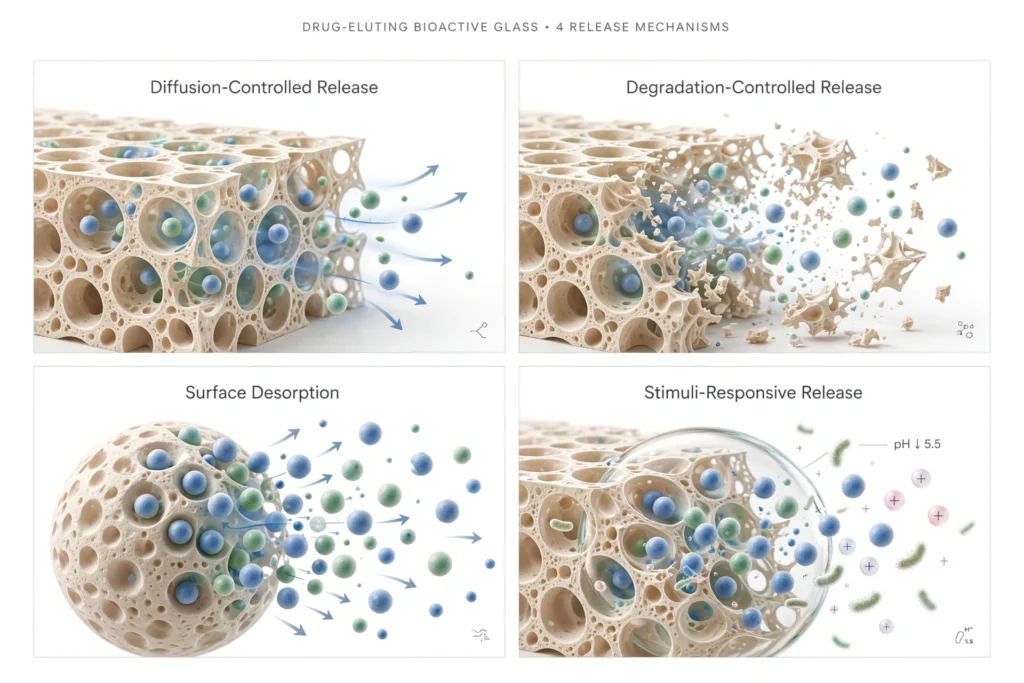
Different mechanisms help control this process.
Therapeutic agents slowly move through tiny interconnected pores inside the bioactive glass, allowing for gradual release over an extended period.
As the bioactive glass naturally dissolves in body fluids, embedded therapeutic agents are released into the surrounding tissue.
Some therapeutic agents are attached to the surface of the material. These are released soon after implantation, providing an early therapeutic effect.
Advanced bioactive glass formulations are being designed to respond to changes in their environment, such as pH, infection-related conditions, or enzymatic activity. This allows therapeutic agents to be released in a more targeted way.
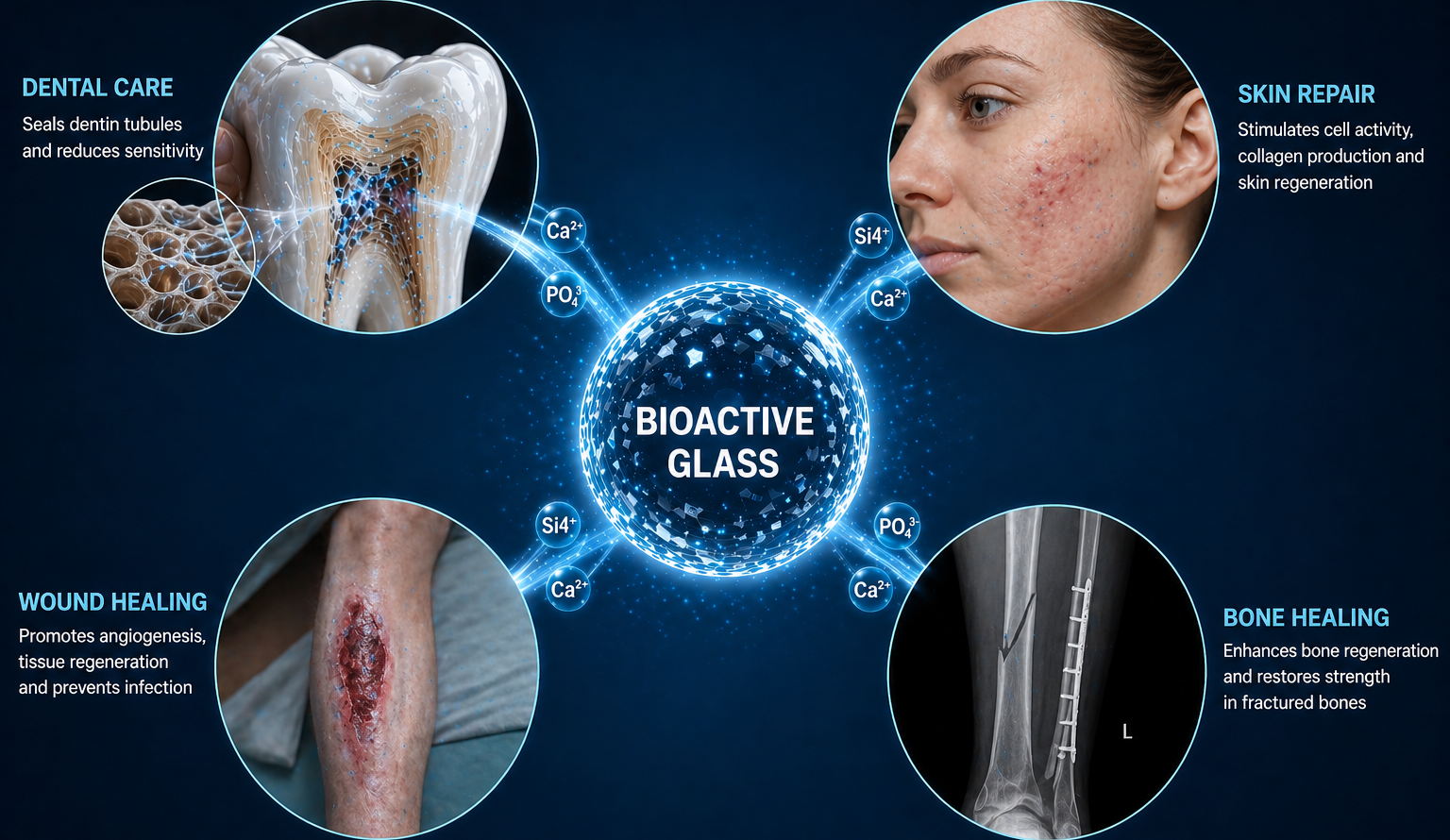
Because it combines bone regeneration with localized therapy, drug-eluting bioactive glass has potential across several healthcare applications.
Bone defects caused by trauma, osteoporosis, or tumour removal often require both structural support and therapeutic treatment.
Drug-loaded bioactive glass can help support bone regeneration while delivering therapeutic agents directly to the affected area.
Bioactive glass has been widely studied for applications such as:
Localized therapeutic release may help reduce infection risks while supporting better integration with surrounding tissues.
Infections around implants remain a significant clinical challenge.
Drug-eluting bioactive glass can be loaded with antibiotics or antimicrobial agents to provide localized delivery at the implant site while reducing exposure to the rest of the body.
Mesoporous bioactive glass is also being explored as a scaffold capable of carrying growth factors, proteins, and nucleic acids that encourage tissue repair and vascularization.
Researchers continue to study drug-eluting bioactive glass because it offers several important advantages.
Some of its key benefits include:
These features make it a promising platform for future regenerative implant technologies.
Research continues to expand the possibilities of drug-eluting bioactive glass.
Scientists are exploring smart implant systems that may respond to biological signals, release multiple therapeutic agents, and support tissue regeneration simultaneously.
Advances in mesoporous bioactive glass, nanotechnology, and surface engineering are expected to further improve controlled drug delivery while expanding applications in orthopaedics, dentistry, oncology, and regenerative medicine.
As clinical evidence continues to grow, these multifunctional biomaterials may play an increasingly important role in future implant technologies.
Drug-eluting bioactive glass combines two important functions within a single material. It supports natural bone regeneration while delivering therapeutic agents directly to the treatment site.
By combining controlled drug release with the biological activity of bioactive glass, this technology offers a promising approach for treating bone defects, implant-related infections, and other localized conditions.
Ongoing research into material composition, drug loading methods, and release mechanisms continues to advance the development of next-generation bioactive glass systems for regenerative medicine.
Contact us through Synthera Biomedical social platforms to stay informed about pioneering bioactive glass research and clinical applications. Follow us on Instagram for product launches and research updates. Join the conversation on Facebook to access valuable resources and community news.