

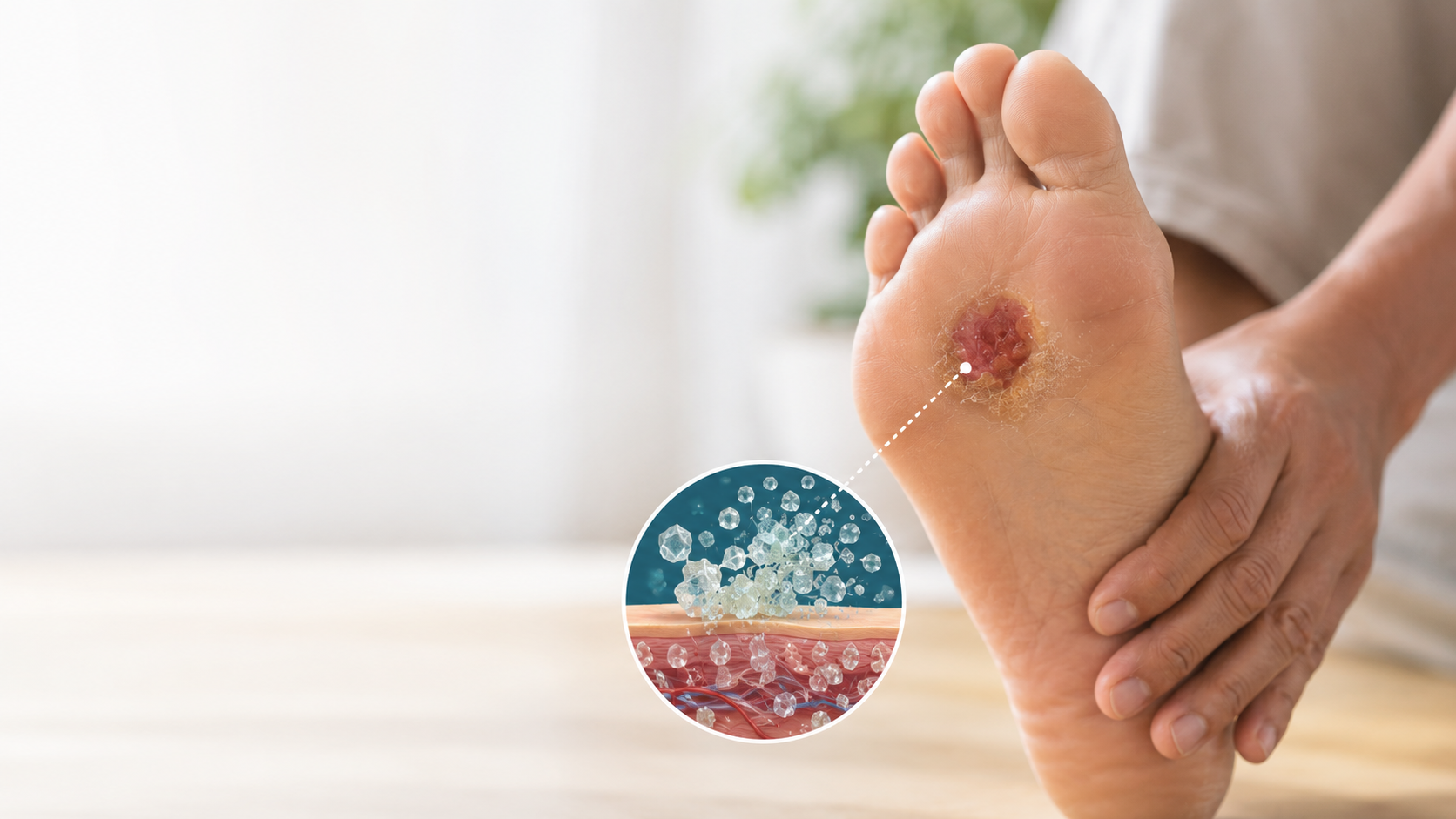
Diabetic foot ulcers (DFUs) are among the most serious complications associated with diabetes. These chronic wounds can be difficult to heal because several factors may affect the normal healing process at the same time, including peripheral neuropathy, poor blood circulation, infection, high blood glucose levels, and impaired tissue repair.
When a diabetic foot ulcer does not heal properly, the wound can become infected and may require hospitalization. In severe cases, it can contribute to lower-limb amputation. This makes effective wound management an important part of diabetic care.
Conventional wound care approaches such as debridement, infection control, offloading, and moisture-retentive dressings have an important role in wound management. However, chronic wounds can remain stuck in a prolonged inflammatory phase, particularly when infection, oxidative stress, poor vascularization, and impaired tissue regeneration are present.
This has increased interest in biomaterials that can do more than simply cover and protect a wound.
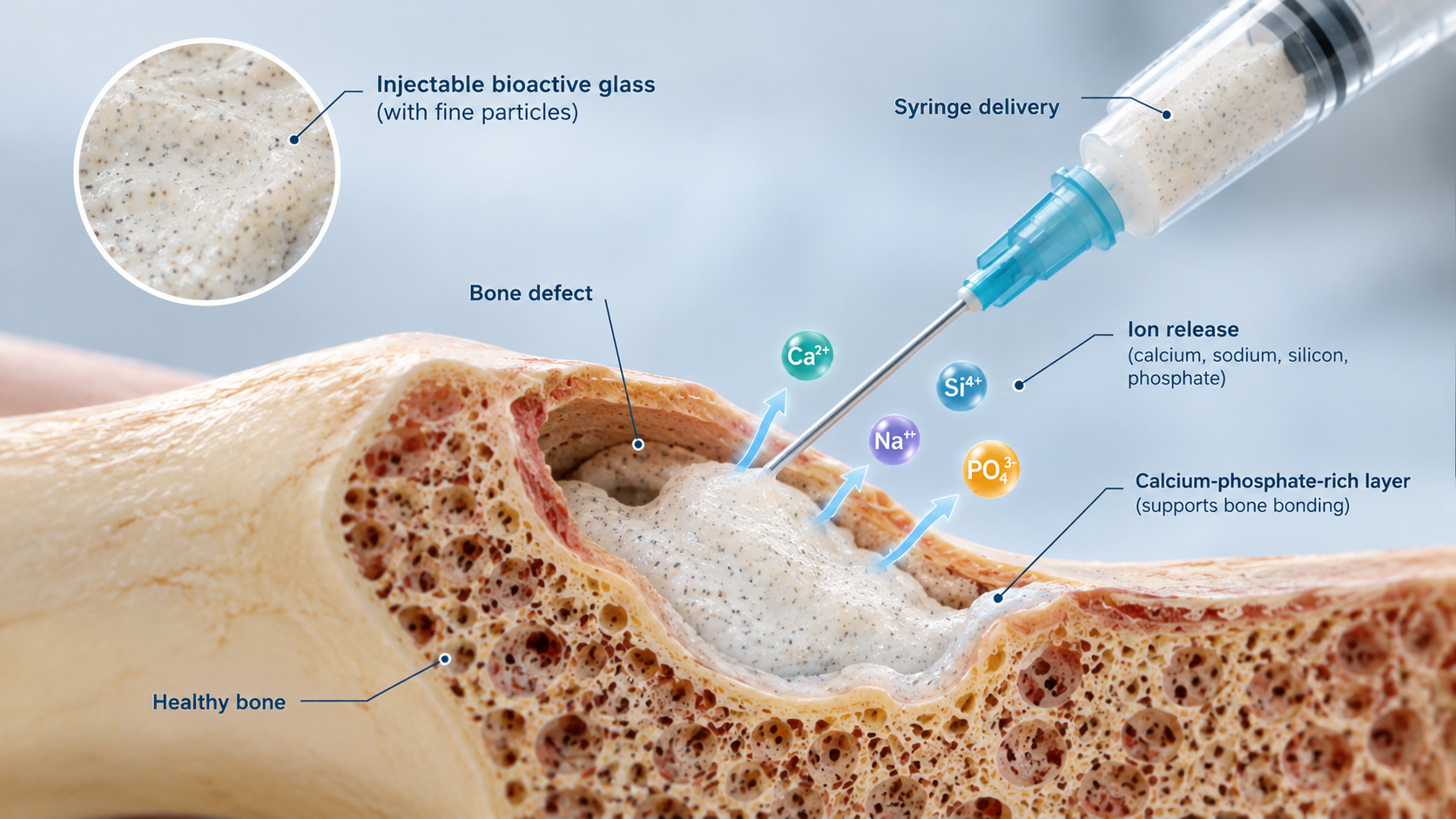
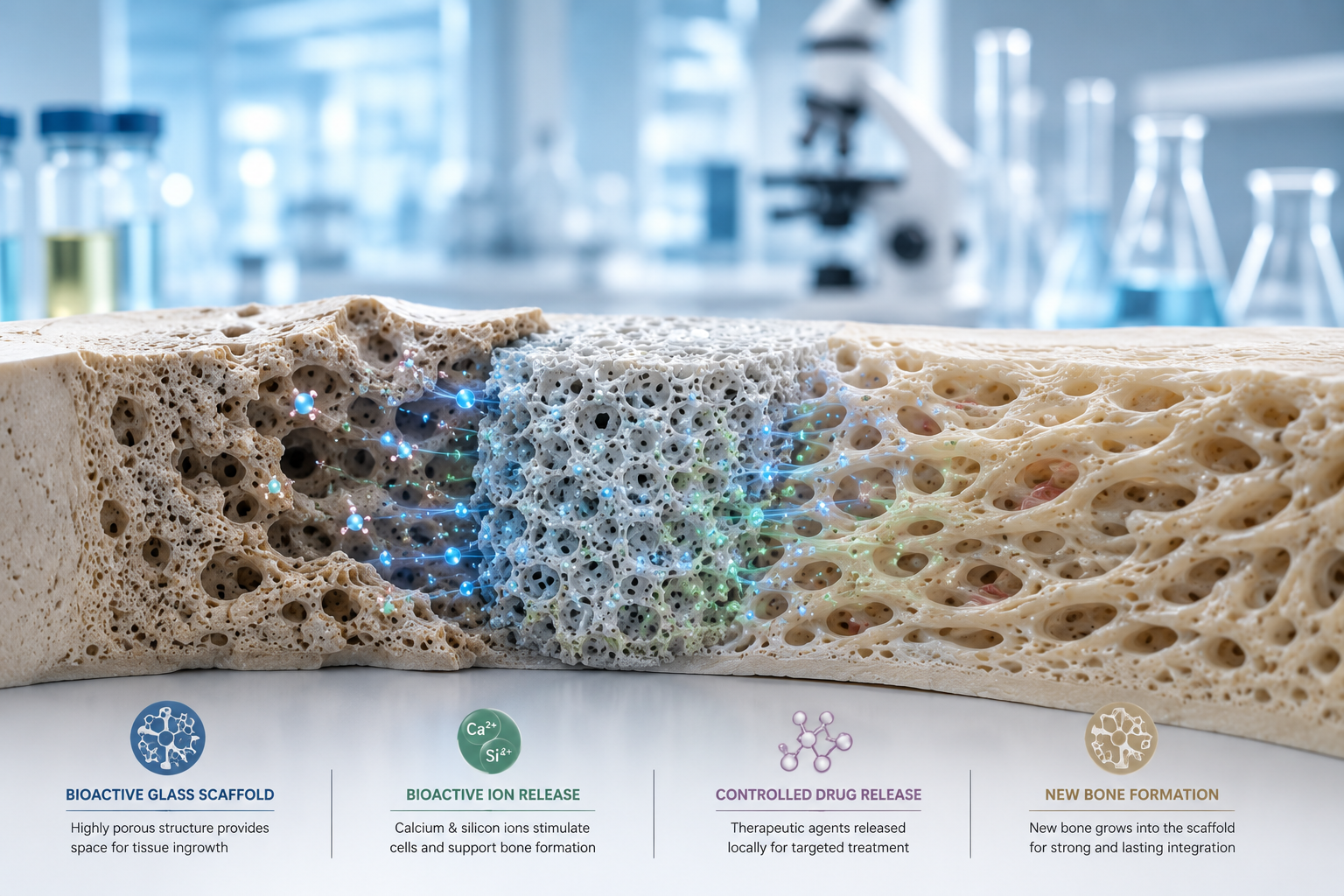
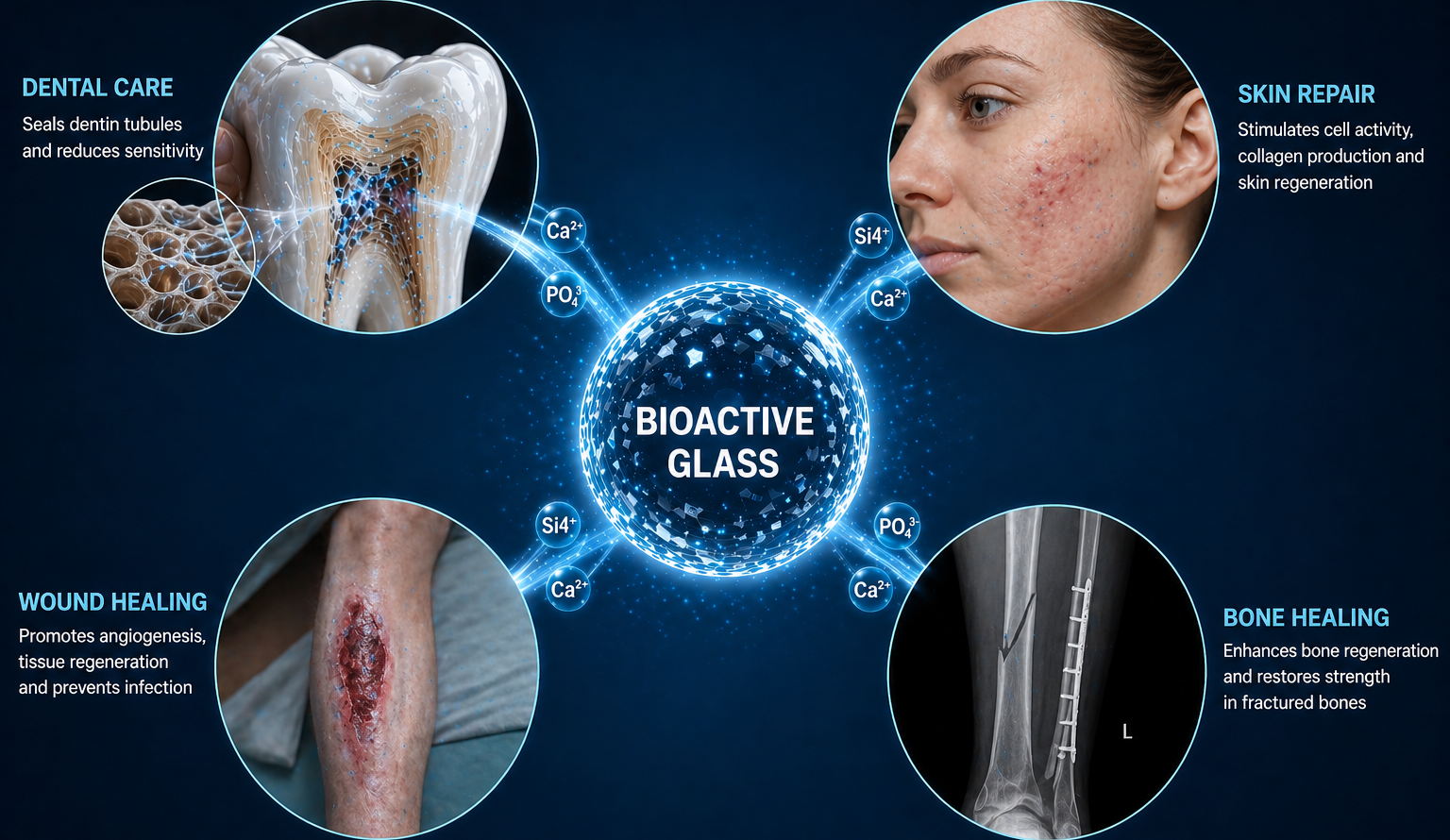
Bioactive glass is one such material. Originally developed for bone regeneration, bioactive glass has also demonstrated properties that make it relevant to advanced wound care. Its ability to release biologically active ions can support processes involved in tissue regeneration, angiogenesis, cellular activity, collagen production, and antibacterial action.
This makes bioactive glass for diabetic foot ulcers a promising area of interest in next-generation wound management.
A diabetic foot ulcer is an open sore or wound that commonly develops on the bottom of the foot in people with diabetes.
Approximately 15–25% of people with diabetes develop a foot ulcer during their lifetime, making diabetic foot ulcers a major cause of non-traumatic lower-limb amputations worldwide.
The development of a DFU is influenced by several factors.
These factors can interfere with the normal progression of wound healing.
A healthy wound normally progresses through different stages of healing. In diabetic wounds, however, the inflammatory phase can become prolonged. Elevated inflammatory cytokines, excessive protease activity, oxidative stress, and impaired angiogenesis can contribute to this chronic wound environment.
As a result, there is continued interest in materials that can actively support the biological processes involved in diabetic wound healing, rather than simply acting as a physical covering.
Bioactive glass is a synthetic, silica-based biomaterial that was first developed by Professor Larry Hench in 1969.
Unlike conventional inert materials, bioactive glass interacts with biological tissues. When it comes into contact with wound fluid, it undergoes a controlled dissolution process and releases biologically active ions.
The best-known composition is 45S5 Bioactive Glass, which consists of approximately:
Modern wound care products can also use customized bioactive glass formulations designed for soft tissue regeneration.
When bioactive glass comes into contact with wound exudate, it releases ions such as:
These released ions help create a microenvironment that supports tissue repair while also contributing to reduced bacterial colonization.
But how does this happen?
The key difference between bioactive glass and a conventional passive dressing is its interaction with the wound environment.
When bioactive glass comes into contact with wound exudate, it undergoes physicochemical reactions that result in the release of biologically active ions. These ions can influence several processes involved in wound healing.
Rather than working through one single mechanism, bioactive glass can support multiple aspects of the healing process, including cellular activity, angiogenesis, antimicrobial activity, collagen production, and extracellular matrix formation.
Let us look at these mechanisms individually.
The biological activity of bioactive glass begins when the material is exposed to wound fluid.
A controlled ion-exchange process takes place between the glass surface and the surrounding physiological fluid. Sodium and calcium ions are exchanged with hydrogen ions, resulting in partial dissolution of the glass network and the release of soluble silicon, calcium, sodium, and phosphate ions.
These ions can then influence cellular behaviour and biological processes involved in wound healing.
Cell migration is important because keratinocytes and fibroblasts need to move into the wound area to support tissue regeneration. Fibroblasts contribute to extracellular matrix production, while keratinocytes support re-epithelialization and restoration of the epidermal barrier.
At the same time, increased collagen production can contribute to the structural strength of newly regenerated tissue.
This makes ion release one of the central features of bioactive glass for wound healing.
Adequate blood supply is important for wound healing. In diabetic foot ulcers, impaired vascularization can contribute to poor oxygen and nutrient delivery to the wound.
Diabetes can affect endothelial function, microvascular health, nitric oxide production, and angiogenic signalling. As a result, chronic wounds may remain in an environment where healing is difficult to progress.
Bioactive glass can support angiogenic activity through the release of biologically active ions.
Among these, soluble silicon ions, including orthosilicic acid, have an important role in stimulating endothelial cell proliferation and increasing the expression of angiogenic growth factors.
These include:
These signalling molecules support endothelial cell migration and capillary sprouting, contributing to the development of new microvascular networks within the wound bed.
Enhanced angiogenesis can support:
This ability to support vascularization is one of the reasons bioactive glass is being explored as a biomaterial for chronic wound care.
Infection is a major concern in diabetic foot ulcers. Chronic wounds can become colonized by polymicrobial biofilms containing bacteria such as:
Bioactive glass can provide antibacterial activity through physicochemical mechanisms rather than relying on a specific antibiotic target.
As the glass dissolves and releases ions, several changes can occur in the local wound environment.
The release of sodium and calcium ions consumes hydrogen ions and can increase the local pH to alkaline levels, typically around pH 9–11.
Most pathogenic bacteria associated with chronic wound infections thrive under near-neutral conditions. The resulting alkaline environment can interfere with bacterial enzyme activity, protein synthesis, and membrane integrity.
The continuous release of soluble ions can increase local osmotic pressure.
This creates an unfavourable environment for bacterial survival and can promote dehydration of bacterial cells, affecting their growth and reproduction.
Changes in the ionic environment can affect bacterial membrane permeability and ion transport systems.
This can interfere with intracellular homeostasis and bacterial metabolism, ultimately contributing to bacterial cell death.
Biofilms can protect bacteria from antibiotics and host immune responses.
Bioactive glass can interfere with bacterial adhesion and extracellular polymeric substance (EPS) production. This can help prevent mature biofilm development and increase bacterial susceptibility to immune clearance.
The antibacterial action of bioactive glass therefore involves environmental and physicochemical changes rather than targeting one specific bacterial pathway.
Fibroblasts are important cells in the tissue repair process. Following the inflammatory phase, they migrate into the wound and contribute to the production of extracellular matrix proteins, growth factors, and collagen.
Diabetes can impair fibroblast activity through factors such as chronic hyperglycemia, oxidative stress, and inflammatory cytokine production.
This is another area where bioactive glass may support wound healing.
The ionic dissolution products released from bioactive glass can improve fibroblast biological activity.
Calcium ions act as important intracellular second messengers involved in signalling pathways related to cell proliferation and migration. Silicon ions can also stimulate gene expression associated with extracellular matrix synthesis.
When fibroblast activity increases, several aspects of tissue repair can benefit.
Together, these effects can contribute to wound closure and tissue regeneration.
Collagen is an important structural protein involved in restoring the strength and integrity of damaged tissue.
In diabetic wounds, collagen synthesis can be reduced, while excessive matrix metalloproteinase (MMP) activity can contribute to collagen degradation. This imbalance can result in fragile granulation tissue and delayed wound closure.
Bioactive glass can support collagen production through controlled ionic stimulation.
Calcium and silicon ions can activate intracellular signalling pathways involved in collagen biosynthesis and extracellular matrix remodelling.
This makes collagen synthesis another important part of the potential role of bioactive glass in diabetic wound healing.
Moisture balance is an important part of modern wound care.
A wound that is too dry can experience delayed epithelial cell migration, while excessive moisture can contribute to tissue maceration and increase susceptibility to infection.
Bioactive glass can be incorporated into different advanced wound care platforms, including:
These systems can combine physical wound protection with the biological activity of bioactive glass.
At the same time, bioactive glass particles incorporated into these systems can continue releasing therapeutic ions in a sustained and controlled manner.
This combination of moisture management, antibacterial activity, and biological stimulation makes bioactive glass-based wound care systems particularly relevant to chronic wounds such as diabetic foot ulcers.
One of the key features of bioactive glass for diabetic foot ulcers is its multifunctional nature.
A conventional dressing may primarily provide physical protection. Bioactive glass, in comparison, can interact with the wound environment and support several biological processes at the same time.
Its potential role in diabetic wound healing involves:
Ion release → Cellular activity → Angiogenesis → Antibacterial action → Collagen production → Tissue remodelling
These processes are interconnected.
For example, ion release can support cellular activity. Increased cellular activity can contribute to extracellular matrix production and collagen synthesis. Angiogenic signalling can support the formation of new microvascular networks, while the antibacterial environment can help address bacterial colonization.
Together, these effects can create a wound environment that is more favourable to tissue repair.
The multifunctional properties of bioactive glass provide several potential advantages in advanced wound care.
Clinical and laboratory studies demonstrate faster healing rates compared with conventional dressings.
Bioactive glass can help reduce bacterial burden without continuous antibiotic exposure.
Chronic inflammation can delay wound healing.
Bioactive glass can help create an environment that is favourable to tissue repair and supports progression from the inflammatory stage towards the proliferative phase of healing.
This is particularly relevant to diabetic foot ulcers, where prolonged inflammation is one of the factors associated with delayed wound healing.
The management of diabetic foot ulcers continues to be challenging because these wounds involve more than a simple break in the skin. Poor vascularization, infection, inflammation, impaired cellular activity, and delayed tissue regeneration can all affect healing.
This is where the multifunctional nature of bioactive glass becomes important.
Rather than functioning only as a physical barrier, bioactive glass can interact with the wound environment through controlled ion release. The resulting biological and physicochemical effects can support angiogenesis, fibroblast activity, collagen synthesis, extracellular matrix production, and antibacterial activity.
Its potential does not come from one individual property. Instead, it comes from the way these different functions work together.
Diabetic foot ulcers remain a major challenge in wound care because several factors can interfere with normal healing. Conventional approaches such as debridement, infection control, offloading, and wound dressings remain important, but chronic wounds can require materials that provide more than passive protection.
Bioactive glass for diabetic foot ulcers represents a promising approach because of its ability to interact with the wound environment.
Through controlled ion release, bioactive glass can support cellular activity, angiogenesis, fibroblast proliferation, collagen synthesis, extracellular matrix production, and antibacterial activity. These properties allow it to address several aspects of the chronic wound environment simultaneously.
Its role in advanced wound care is therefore not limited to protecting the wound. Bioactive glass can actively participate in the biological processes associated with tissue repair.
As research and development in bioactive glass-based wound care continue, optimized formulations and clinical validation can further define its role in diabetic wound management.
For diabetic foot ulcers, the future of wound care may increasingly focus on materials that do more than cover a wound – materials that actively support the environment required for healing.
Contact us through Synthera Biomedical social platforms to stay informed about pioneering bioactive glass research and clinical applications. Follow us on Instagram for product launches and research updates. Join the conversation on Facebook to access valuable resources and community news.

WhatsApp us